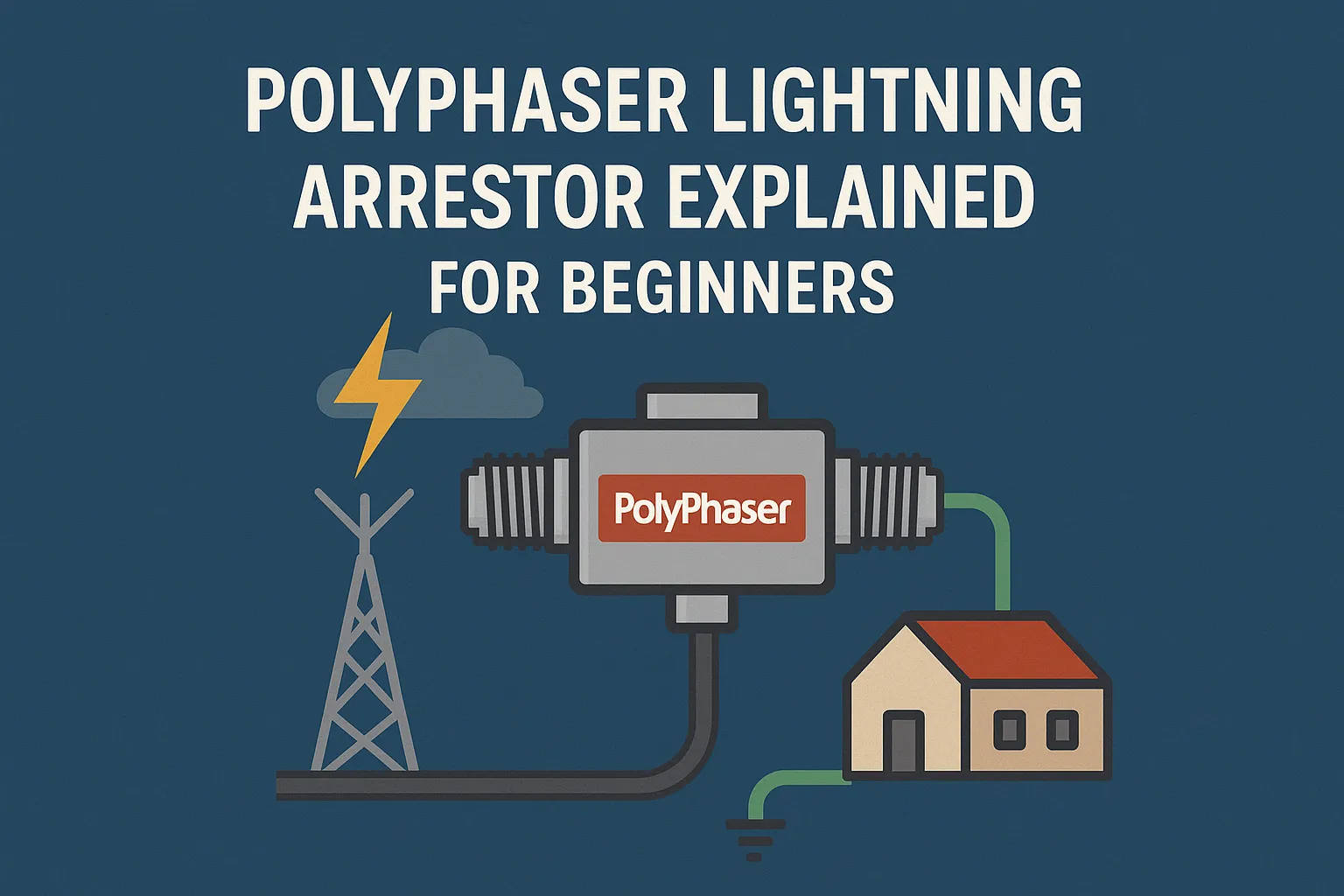
A PolyPhaser lightning arrestor is a specialized device designed to protect your equipment from the destructive effects of lightning strikes. Lightning can cause severe damage to sensitive electronics, with nearly 30% of power outages linked to lightning-related incidents. These arrestors use advanced surge protection technology to minimize damage and downtime. When lightning strikes, it generates powerful surges that can disrupt or destroy your systems.
PolyPhaser lightning protectors work by integrating physical lightning protection, high-integrity grounding, and surge suppression. This combination ensures your equipment stays safe and operational, even during extreme weather conditions. With a PolyPhaser, your gear is safer and less likely to break, saving you money on fixes or replacements.
How a PolyPhaser Lightning Arrestor Works
Key Components
Surge suppression technology
PolyPhaser lightning arrestors rely on advanced surge suppression technology to protect your equipment from harmful voltage spikes. These devices use several key components to ensure effective protection:
-
Gas discharge tubes: These components absorb high-voltage surges, preventing them from reaching your sensitive electronics.
-
DC blocking capacitors: These allow AC signals to pass through while blocking DC currents, ensuring smooth operation of your systems.
-
Lumped elements surge protection technologies: These provide an extra layer of defense against transient surges.
-
Hybrid design: By combining multiple protection methods, the arrestor enhances its ability to handle diverse surge scenarios.
This combination of technologies ensures that your equipment remains safe, even during extreme lightning events.
Grounding mechanisms
Effective grounding is essential for any lightning protection system. PolyPhaser lightning arrestors use high-integrity grounding mechanisms to direct excess energy safely into the ground. This minimizes the risk of overvoltage damage and ensures your equipment stays operational. Proper grounding also reduces electromagnetic interference, which can disrupt communication systems.
Protection Mechanism
Diverting excess voltage to the ground
When lightning strikes, it generates powerful surges that can damage your equipment. PolyPhaser lightning arrestors divert this excess voltage away from your systems and into the ground. This process protects your equipment and ensures it continues to function without interruption.
Preventing damage to sensitive electronics
The integration of physical lightning protection, single-point grounding, and surge suppression technologies ensures that your sensitive electronics remain unharmed. This mechanism not only prevents costly repairs but also maintains the reliability of your network.
Applications
Telecommunications and RF systems
PolyPhaser lightning arrestors are widely used in telecommunications and RF systems. They provide surge protection against lightning strikes and transient events caused by faulty load switching or electromagnetic pulses (EMP). These arrestors ensure reliable network performance and minimize downtime, making them essential for maintaining communication infrastructure.
Industrial and commercial setups
In industrial and commercial environments, these arrestors protect critical equipment from voltage surges. They safeguard systems like power distribution networks, manufacturing machinery, and data centers, ensuring uninterrupted operations.
Emergency communication systems
Emergency communication systems rely on uninterrupted functionality, especially during severe weather conditions. RF lightning protectors, such as PolyPhaser models, play a key role in protecting these systems from lightning-induced surges. This ensures that emergency services can communicate effectively when it matters most.
Importance of a PolyPhaser Lightning Arrestor
Benefits
Prevents costly equipment damage
A PolyPhaser lightning arrestor protects your sensitive equipment from the devastating effects of lightning strikes and power surges. Without this protection, lightning can cause irreparable damage to electronics, leading to expensive repairs or replacements. These arrestors also shield your systems from transient power spikes caused by anomalies like faulty load switching. This ensures your equipment remains safe and operational, even during unpredictable weather events.
Ensures system reliability and uptime
Lightning-related power outages account for nearly 30% of all outages annually. Installing a complete lightning protection system, including PolyPhaser lightning protectors, significantly reduces the risk of downtime. This ensures your systems maintain consistent performance, which is critical for industries that rely on uninterrupted operations. Reliable protection translates to fewer disruptions and greater peace of mind.
Risks Without Protection
Equipment failure from lightning strikes
Lightning strikes can generate powerful surges that overwhelm traditional lightning rods. These surges often lead to overvoltage, which damages sensitive electronics like servers and communication systems.
Facilities with flammable materials or critical assets face even greater risks, as lightning can ignite fires or cause catastrophic failures.
Safety hazards and downtime
Without a proper lightning protection system, you expose your facility to safety hazards and prolonged downtime. Secondary surge effects can disrupt operations, leading to financial losses and compromised safety. Proactive measures, such as installing PolyPhaser lightning protectors, help you avoid these risks and maintain operational reliability.
Industries That Depend on Lightning Protection
Aviation and aerospace
Airports and aerospace facilities rely on advanced lightning protection systems to safeguard their equipment. Lightning strikes can disrupt navigation systems, radar, and communication networks, posing serious risks to safety and operations.
Data centers and IT infrastructure
Data centers house sensitive electronic equipment that requires constant protection from power surges. Lightning-induced outages can lead to data loss, service disruptions, and costly downtime. A PolyPhaser lightning arrestor ensures your IT infrastructure remains secure and operational.
Outdoor communication systems
Outdoor communication systems, such as cell towers and emergency networks, are highly vulnerable to lightning strikes. These systems often operate in exposed environments, making them prime targets for surges.
Installing a complete lightning protection system ensures uninterrupted communication, even during severe weather conditions.
Choosing the Right PolyPhaser Lightning Arrestor
Key Considerations
Voltage and frequency requirements
When selecting a PolyPhaser lightning arrestor, you must first evaluate the voltage and frequency requirements of your equipment. Each device operates within specific voltage and frequency ranges. Choosing an arrestor that matches these parameters ensures optimal performance and protection.
For example, RF systems often require arrestors designed for high-frequency signals, while power distribution systems may need devices rated for higher voltages.
Equipment type and location
The type and location of your equipment play a significant role in determining the right lightning protection device. Equipment installed outdoors, such as antennas or communication towers, faces higher exposure to lightning strikes. In contrast, indoor systems may require arrestors with lower exposure ratings.
Always install lightning protectors as close as possible to where the coaxial cable enters the building. This placement minimizes the risk of surges reaching your equipment.
Environmental factors (indoor vs. outdoor use)
Environmental conditions also influence your choice. Outdoor installations demand arrestors with weatherproof designs to withstand harsh conditions. Indoor setups may not face the same challenges but still require proper grounding. Ensure that ground wires have low impedance and meet recommended wire gauge standards.
Bond the equipment’s single-point ground to the cable entrance bus bar and the building’s electrical ground for maximum effectiveness.
Understanding Specifications
Power handling capacity
Power handling capacity indicates how much energy the arrestor can safely manage during a surge. Selecting a device with insufficient capacity could lead to equipment failure. Always verify that the arrestor’s power rating exceeds the maximum surge energy expected in your system.
Insertion loss and return loss
Insertion loss measures the signal loss caused by the arrestor, while return loss indicates how much signal reflects back toward the source. Both factors affect system performance. Look for lightning protection devices with low insertion loss and high return loss to maintain signal integrity.
Seeking Expert Advice
Importance of consulting professionals
Lightning protection can be complex. Consulting professionals ensures you select the right PolyPhaser lightning arrestor for your needs. Experts can assess your system’s requirements, recommend suitable products, and guide you through the installation process.
Resources for product selection
Many manufacturers provide detailed product guides and technical support to help you choose the best lightning protectors. Online resources, such as specification sheets and installation manuals, offer valuable insights. Use these tools to make informed decisions and enhance your system’s protection.
Installation and Maintenance of a PolyPhaser Lightning Arrestor
Installation Basics
Proper grounding techniques
Proper grounding is critical for the effectiveness of any lightning and surge protection system. You must connect the PolyPhaser lightning arrestor to a well-installed ground system. Use low-impedance ground wires, ideally #6 AWG or better, and keep them as short as possible. Avoid sharp bends in the wire; instead, maintain a minimum radius of 8 inches for any curves. Bond the equipment’s single-point ground to the cable entrance bus bar and the building’s electrical ground.
This setup ensures that excess energy from lightning strikes is safely directed into the ground, protecting your equipment from damage.
Placement in the system
Positioning the arrestor correctly is essential for optimal surge protection. Install the PolyPhaser lightning arrestor as close as possible to where the coaxial cable enters the building. Terminate the coaxial cable at the entry point and connect it to the arrestor, which should be grounded to a bus bar. This placement minimizes the risk of surges traveling further into your system.
For outdoor installations, ensure the arrestor is weatherproof and securely mounted to withstand environmental conditions.
Maintenance Tips
Regular inspections and testing
Routine maintenance keeps your rf lightning protectors functioning effectively. Inspect the grounding system regularly to ensure all connections remain secure and free of corrosion. Testing rf lightning protectors periodically helps verify their performance. Use specialized equipment to measure the arrestor’s response to simulated surges. Replace any components that show signs of wear or reduced functionality.
Post-storm functionality checks
After a storm, check the arrestor for any signs of damage. Lightning strikes can degrade the performance of lightning protectors over time. Inspect the grounding wires and connections for integrity. If you notice any issues, address them immediately to maintain reliable surge protection.
Common Mistakes
Incorrect grounding
Improper grounding is one of the most common errors during installation. Using multiple ground rods without proper bonding can create potential differences, reducing the system’s effectiveness. Always bond ground rods together and connect them to the building’s electrical ground.
Using incompatible arrestors
Selecting the wrong arrestor for your system can compromise protection. Ensure the PolyPhaser lightning arrestor matches your equipment’s voltage and frequency requirements. Incompatible arrestors may fail to handle surges effectively, leaving your equipment vulnerable.
A PolyPhaser lightning arrestor is essential for protecting your equipment from lightning-induced surges. It works by diverting excess voltage to the ground, safeguarding sensitive electronics and ensuring system reliability. Choosing the right arrestor involves evaluating voltage requirements, equipment type, and environmental factors. Proper installation and regular maintenance further enhance its effectiveness.
Explore PolyPhaser solutions to protect your mission-critical systems. Their reliable designs minimize degradation and shield against power spikes, ensuring long-term performance. With lightning-related outages causing up to $1 billion in losses annually, investing in robust surge protection is a smart choice for safeguarding your operations.
FAQ
What is the lifespan of a PolyPhaser lightning arrestor?
The lifespan depends on usage and environmental conditions. Regular inspections and maintenance can extend its life. Most arrestors last several years, but you should replace them after significant lightning strikes or if performance tests show reduced functionality.
Can I install a PolyPhaser lightning arrestor myself?
You can install it if you have basic electrical knowledge. However, consulting a professional ensures proper grounding and placement. Incorrect installation can reduce effectiveness and leave your equipment vulnerable to surges.
How do I know if my lightning arrestor is working?
Perform regular inspections and functionality tests. Use specialized equipment to simulate surges and check the arrestor’s response. After storms, inspect for visible damage or degraded performance. Replace the device if it fails to meet performance standards.
Are PolyPhaser lightning arrestors weatherproof?
Most outdoor models are weatherproof and designed to withstand harsh conditions. Always verify the product specifications to ensure it suits your environment. Indoor models may lack weatherproofing and require proper placement for protection.
Do I need a lightning arrestor for indoor equipment?
Yes, indoor equipment can still experience surges from lightning strikes or power anomalies. Installing a lightning arrestor at the cable entry point protects your indoor systems from these risks, ensuring uninterrupted operation.