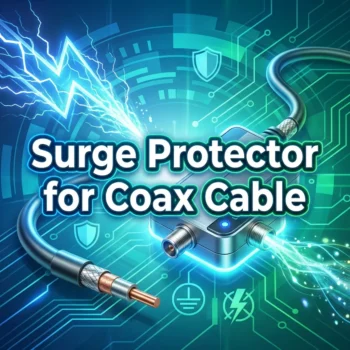
You might wonder if your home needs a surge protector for coax cable. Coax lines can bring dangerous electrical surges into your TV or modem. Even a good power strip cannot block these threats. Do you want to avoid costly repairs? A quality lightning surge protector can help keep your electronics safe.
Key Takeaways
-
A coax surge protector shields your electronics from dangerous electrical surges that can enter through coax lines, preventing costly repairs.
-
Installing a coax surge protector is easy and affordable, often costing less than $40, making it a smart investment for protecting high-value devices.
-
If you live in storm-prone areas or have expensive electronics, adding a coax surge protector enhances your home’s safety and keeps your devices running smoothly.
Key Functions of the Coax Cable Ports
Basic Function
You use coax ports every day, often without noticing. These ports connect your TV, modem, or router to the outside world. The main job of a coax port is to transmit signals for cable television, broadband internet, and even some audio systems. You rely on these connections for clear TV pictures and fast internet speeds.
A coax port works with a special type of wire. This wire has four main parts:
-
Central copper conductor
-
Dielectric insulation
-
Braided metal shield
-
Outer jacket
This design helps the coax wire carry radio frequency signals. It also blocks outside interference, so you get a strong, reliable signal. You can run coax lines over long distances in your home without losing quality.
How It Protects Electronics
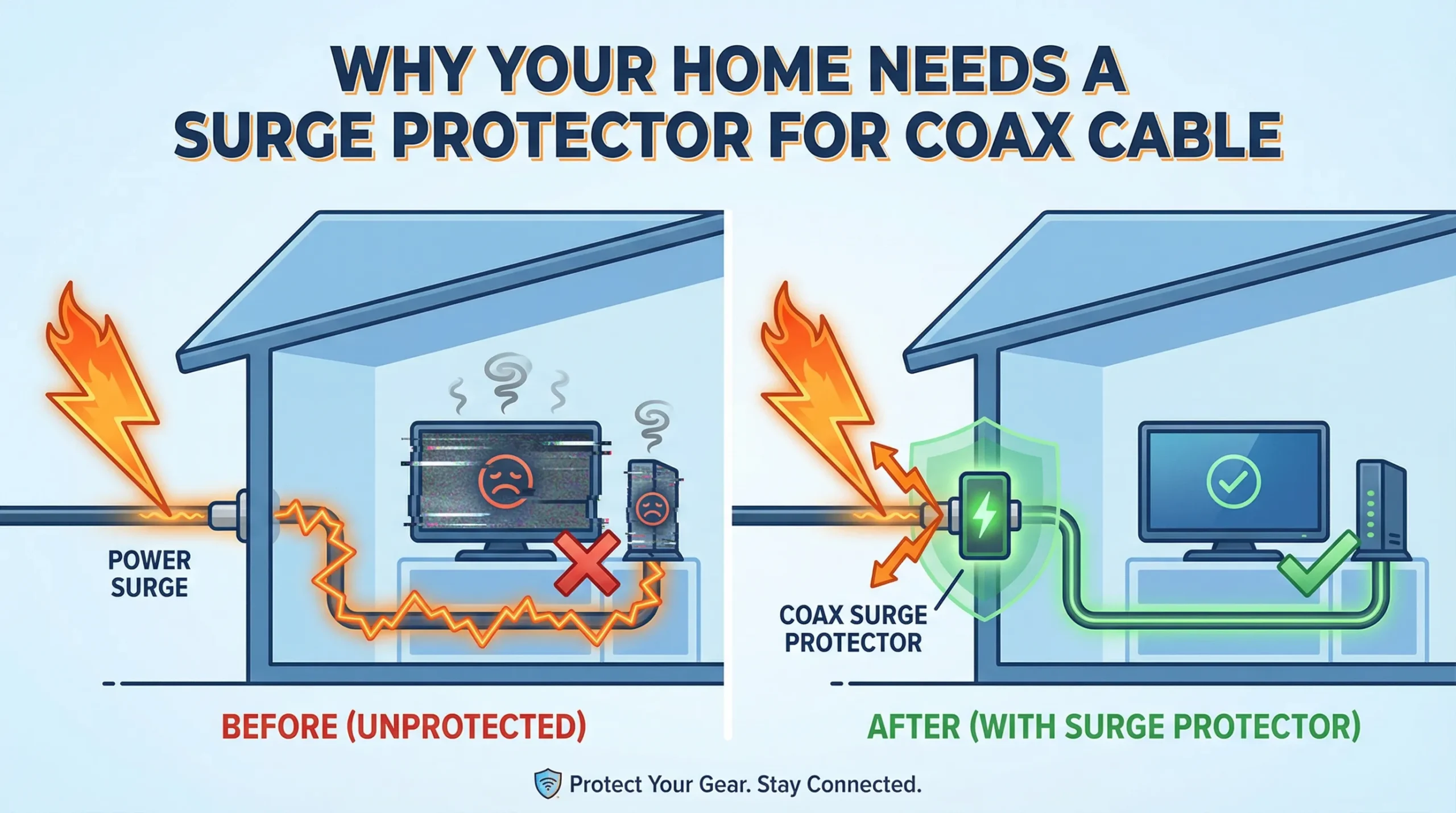
A surge protector for coax acts like a safety gate. When a power surge travels through the coax line, the protector diverts the extra voltage away from your devices. You avoid sudden damage to your TV, modem, or router. This small device can stop a surge from frying your electronics.
You might think your regular surge protector is enough. However, surges can sneak in through the coax line, not just the power outlet. By adding a coax surge protector, you create a second line of defense. You keep your home network and entertainment system safe from unexpected electrical spikes.
Tip: If you live in an area with frequent storms, a coax surge protector adds peace of mind.
Pros of Coax Surge Protectors
Shields Expensive Devices
You invest a lot in your electronics. Your TV, modem, and router can cost hundreds or even thousands of dollars. A surge protector for coax cable acts as a shield for these devices. When a surge travels through the coax line, the protector stops it before it reaches your equipment. You avoid sudden failures and expensive repairs. This extra layer of defense keeps your home entertainment and internet running smoothly, even during storms or power fluctuations.
Prevents Data Loss and Interruptions
Losing your internet connection or TV signal can be frustrating. A surge protector for coax cable helps you avoid these problems. It blocks dangerous voltage spikes that can damage your modem or router. You keep your connection stable and your data safe. The technology inside coax surge protectors offers several important features:
|
Feature |
Description |
|---|---|
|
Surge & Overload Protection |
Integrated fuses and transient voltage suppression increase system durability and reduce repair frequency. |
|
Protective Circuitry |
Guards against overcurrent, short circuits, and voltage surges, preventing damage to devices. |
|
RF/DC Isolation |
Prevents DC voltage from interfering with RF signals, preserving signal integrity. |
|
Low Insertion Loss |
Introduces minimal signal loss (typically less than 1 dB), maintaining optimal signal levels. |
|
Noise Suppression |
Reduces electromagnetic interference (EMI) that could degrade picture quality. |
You get reliable performance for your internet and TV. You also reduce the risk of losing important files or missing your favorite shows.
Reduces Fire and Damage Risks
Electrical surges can do more than just harm your electronics. They can also create heat and sparks, which may lead to fires. By installing a surge protector for coax cable, you lower the risk of fire in your home. The protector diverts excess energy safely away from your devices and wiring. You protect your family and your property from hidden dangers that can come through the coax line.
Easy and Affordable Setup
You do not need to spend a lot of money or time to add this protection. Most coax surge protectors are simple to install. You connect them between your incoming coax line and your device. Many models, such as the BELKIN BE112234-10, cost less than $40.
Such a small investment can save you from much larger repair bills. You do not need special tools or technical skills.
You can add surge protection to your home in just a few minutes.
Tip: If you live in a storm-prone area, adding a surge protector for coax cable is a smart and affordable way to protect your electronics.
Cons of Coax Surge Protectors
Limited Surge Protection
You might think a surge protector for coax gives full protection. In reality, it only guards against surges that enter through the coax line. It does not shield your devices from surges that come through power lines. If you want complete protection, you need to use surge protectors for both coax and electrical outlets.
You should not rely on a coax surge protector alone.
Note: A coax surge protector works best as part of a larger safety plan for your electronics.
Possible Signal Loss
Adding a surge protector to your coax setup can cause minor signal loss. The device sits between your coax line and your TV or modem. It may reduce signal strength slightly. You could notice a drop in picture quality or slower internet speeds. Most modern surge protectors keep signal loss low, but you should check the specifications before buying.
If you use high-speed internet or watch HD television, pay attention to the insertion loss rating.
|
Factor |
Impact on Signal |
|---|---|
|
Insertion Loss |
Slight decrease |
|
Noise Filtering |
May improve |
|
Quality Rating |
Varies by model |
Extra Cost and Upkeep
You need to spend extra money to add a coax surge protector. The device costs more than a basic cable connection. You may also need to replace it after a major surge or lightning strike. Some models require regular checks to make sure they still work. If you want to protect your electronics, you must consider both the initial cost and ongoing maintenance.
When You Might Skip a Coax Surge Protector
You do not always need a coax surge protector in your home. Some situations carry less risk for electrical surges. You can save money and avoid extra equipment if you know when protection is not essential.
Centralized Building Protection
Many apartment buildings and condos use centralized surge protection systems. These systems protect all incoming lines, including coax cables, at the main entry point. If your building has this setup, you already have a strong layer of defense. You can ask your building manager or maintenance team about the protection in place.
Low-Risk Areas
Some regions rarely experience storms or power surges. If you live in a city with underground utilities or stable weather, your risk drops. You may not need a coax surge protector if outages and lightning strikes almost never happen. Focus your protection on areas with higher risk.
Here are signs you live in a low-risk area:
-
No frequent thunderstorms
-
Reliable power grid
-
Underground power lines
Few Connected Devices
If you only use one or two basic devices, the risk of major loss stays low. For example, you might only have a small TV or a basic cable box. You can decide to skip surge protection if you do not have expensive or critical electronics connected to your coax line.
|
Number of Devices |
Risk Level |
Suggested Action |
|---|---|---|
|
1-2 |
Low |
Optional protection |
|
3+ |
Higher |
Add surge protector |
You make the best choice when you match your protection to your actual needs.
You see many benefits with coaxial surge protectors. These devices give protection against surges, shield your electronics, and offer peace of mind. You may notice small drawbacks, but most homes gain more than they lose. Experts suggest you unplug electronics during outages. You should check your setup and add coaxial surge protectors if you own high-value devices.
-
Unplug computers, TVs, and mobile phones during power outages.
-
Unplug appliances with digital displays.
-
Wait until power is stable before plugging devices back in.
Coaxial surge protectors work best when you use them with other safety steps. You protect your home and your investment.