
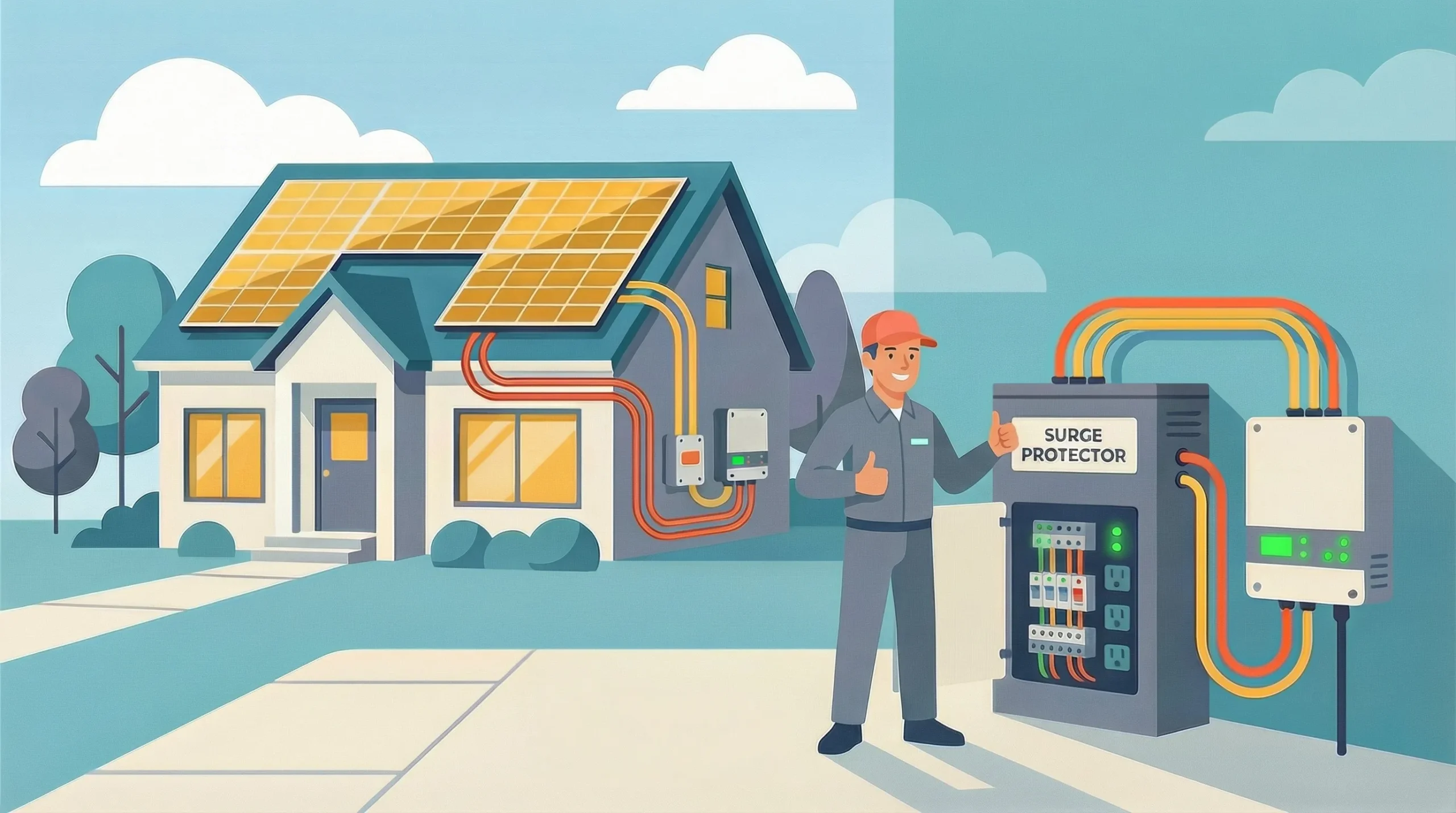
A surge protector acts as a shield for your solar power system, guarding it against sudden voltage spikes. These spikes, often caused by lightning strikes or grid fluctuations, can damage sensitive components like inverters and charge controllers. Without protection, you risk increased maintenance costs, system downtime, and even safety hazards like fires. Proper installation ensures long-term reliability, with studies showing that 79% of professionals observed reduced equipment failure after installing surge protective devices.
Knowing how to install surge protector in solar system setups can save you from costly repairs and keep your energy production uninterrupted.
Choosing the Right Surge Protector
Types of Surge Protectors
When selecting a surge protector for your solar power system, understanding the different types is crucial. Each type serves a specific purpose and offers varying levels of protection:
-
Main Surge Protectors: These devices are installed at the main power entry point. They protect your entire system from external surges, such as those caused by lightning strikes. Industry reports highlight the growing importance of Type 1 SPDs (Surge Protective Devices) for safeguarding solar plants from lightning surges.
-
Circuit-Level Surge Protectors: These protectors are placed at sub-panels or distribution boards. They shield specific circuits from internal surges caused by equipment switching or faults.
-
Load-Side Surge Protectors: Installed near individual devices, these protect sensitive equipment like inverters and charge controllers. They provide localized protection, ensuring critical components remain safe.
Key Specifications to Consider
Choosing the right surge protector involves evaluating its technical specifications. Here are the key metrics to focus on:
|
Specification |
Details |
|---|---|
|
Maximum Continuous Operating Voltage (Uc PV) |
Match or exceed the maximum voltage of your solar panel (e.g., 600V, 1000V). |
|
Surge Current Rating (Imax) |
Indicates the maximum current the device can handle during a surge (e.g., 20kA, 40kA). |
|
Voltage Protection Level (Vp) |
Lower Vp values offer better protection by limiting transient voltages. |
|
Reaction Time |
Faster response times (e.g., 1-5 nanoseconds) ensure quicker protection. |
|
Warranty and Lifetime |
Check the manufacturer’s warranty and expected lifespan for reliability. |
Also, think about the clamping voltage; this sets the voltage level where the protector kicks in. Lower clamping voltages, like 400V or less, offer better defense. Surge protectors with higher energy absorption ratings (measured in joules) can deal with stronger surges.
Here are some suggested brands and models.
Recommended Brands and Models
Several trusted brands offer high-quality surge protectors designed for solar systems. Here are some top recommendations:
-
Schneider Electric: Known for its high surge capacity and robust designs, Schneider Electric provides reliable protection for solar installations.
-
Eaton: Offers surge protectors with advanced features like LED indicators and UL certification, ensuring safety and performance.
-
Leviton: Specializes in devices with excellent clamping voltage ratings and long warranties.
|
Feature |
Description |
|---|---|
|
Surge Capacity |
Handles surges of 40,000 amps or more. |
|
LED Indicators |
Alerts you when the device activates or needs replacement. |
|
Response Time |
Best protectors respond in less than a nanosecond. |
|
Certifications |
Look for UL certification to ensure compliance with safety standards. |
Picking a surge protector from these brands ensures you get a device with proven performance and durability. Always prioritize models with features like high surge capacity and status indicators for added convenience.
How to Install Surge Protector in Solar System
Preparing for Installation
Before you begin, gather all the tools and equipment. You will need a screwdriver, a multimeter, and insulated gloves to ensure safety during the process. These tools will help you handle the components securely and test the connections later.
Next, turn off your solar power system completely. Disconnect it from the grid to eliminate any risk of electric shock. This step is critical for your safety and prevents accidental damage to the system. Identify the appropriate location for the surge protector. It could be near the main electrical panel, the solar inverter, or specific circuits, depending on your setup.
Connecting the Surge Protector
Once you have prepared the system, start connecting the surge protector. Follow these steps carefully:
-
Connect the red wire to the positive terminal of your solar system. This wire handles the incoming current and must be securely attached.
-
Attach the black wire to the negative terminal. This connection completes the circuit and ensures proper functionality.
-
Ground the green wire to the main ground of your house. Proper grounding is essential as it provides a low-impedance path for surge currents, protecting your system from voltage spikes.
Ensure the surge protector complies with standards like UL 1449 or IEC 61643-31. These certifications guarantee the device’s reliability and safety.
Testing and Finalizing
After connecting the wires, test the setup using a multimeter. Check for proper voltage levels and ensure all connections are secure. Testing confirms that the surge protector is functioning as intended. Double-check every connection to avoid loose or faulty wiring.
Once satisfied, restore power to your solar system. Monitor the system for any irregularities, such as unusual noises or fluctuations. If everything operates smoothly, your surge protector is successfully installed.
|
Testing Standard |
Description |
|---|---|
|
IEC 61643-11 |
Requirements and test methods for low-voltage surge protective devices. |
|
UL 1449 |
Underwriters Laboratories standard for surge protective devices. |
|
ANSI/IEEE C62.xx |
Standards for surge protective devices in electrical systems. |
|
EN 61643-11 |
European standard for surge protective devices. |
Following these steps ensures your solar power system is well-protected against voltage surges. Knowing how to install surge protector in solar system setups can save you from costly repairs and extend the lifespan of your equipment.
Determining the Ideal Location
Placement Options
Choosing the right location for your surge protector is essential for effective protection. Here are three common placement options to consider:
-
Near the Solar Inverter: Installing the surge protector close to the inverter minimizes the distance between the device and the most sensitive equipment. This placement reduces the risk of voltage spikes reaching the inverter, which is a critical component of your solar power system.
-
At the Main Electrical Panel: Placing the surge protector at the main electrical panel provides system-wide protection. This location ensures that all circuits connected to the panel benefit from the device, safeguarding your entire solar setup from external surges.
-
On Individual Circuits or Loads: For targeted protection, you can install surge protectors on specific circuits or loads. This option is ideal for shielding high-value or sensitive equipment, such as charge controllers or battery storage systems.
Factors to Consider
To find the best spot, you’ll want to consider a few things to make sure everything runs smoothly and follows the rules:
Proximity to Sensitive Equipment
The closer the surge protector is to sensitive equipment, the better it can shield against voltage spikes. For example, placing it near the inverter or charge controller reduces the likelihood of damage. Ensure the surge protector’s current rating meets or exceeds the maximum surge current your system may encounter. This step is crucial for maintaining reliability and safety.
Accessibility for Maintenance
Choose a location that allows easy access for inspection and maintenance. Surge protectors require periodic checks to ensure they function correctly. An accessible placement saves time and effort during routine maintenance or replacement.
Compliance with Local Electrical Codes
Always follow local electrical codes and regulations when installing surge protectors. These codes often specify placement requirements to ensure safety and effectiveness. For photovoltaic applications, select a surge protective device (SPD) with a voltage rating that exceeds the maximum expected system voltage. Proper installation ensures compliance and effective surge protection.
|
Factor |
Importance |
|---|---|
|
Proximity to Equipment |
Reduces risk of damage to sensitive components like inverters. |
|
Accessibility |
Simplifies maintenance and replacement tasks. |
|
Code Compliance |
Ensures safety and adherence to local regulations. |
By carefully considering these factors, you can maximize the effectiveness of your surge protector and protect your solar power system from potential damage.
Installation Tips and Best Practices
Safety Guidelines
Always turn off power before installation
You must prioritize safety when installing a surge protector. Always turn off the power supply to your solar system before starting the process. This step prevents electrical shocks and protects your equipment from accidental damage. Following Lockout-Tagout (LOTO) procedures ensures the power remains off during installation. Use a lock or tag to secure the switch in the “off” position, preventing accidental reactivation.
Use insulated tools and wear protective gear
Working with electrical systems requires proper tools and protective equipment. Use insulated tools to avoid accidental contact with live wires. Wear rubber-insulated gloves and safety goggles to shield yourself from electrical hazards. Grounding or discharge sticks can also help safely dissipate residual charges.
These precautions align with safety standards like ANSI/IEEE C62.xx and UL 1449, which emphasize the importance of personal protective equipment (PPE) during electrical work.
Efficiency Tips
Choose a surge protector with a status indicator
Selecting a surge protector with an integrated status indicator enhances efficiency. These indicators notify you when the device has absorbed a surge or needs replacement. Without this feature, you might unknowingly use a non-functional protector, leaving your system vulnerable.
Studies show that surge protectors with status indicators improve maintenance efficiency by reducing downtime and ensuring continuous protection.
Regularly inspect connections for wear or damage
Inspect your surge protector and its connections periodically. Look for signs of wear, such as frayed wires, corrosion, or burnt components. A damaged surge protector cannot provide adequate protection. Check the indicator light regularly; if it’s off, replace the device immediately.
Proactive monitoring helps maintain the reliability of your solar power system.
Common Mistakes to Avoid
Incorrect placement of the surge protector
Placing the surge protector in the wrong location reduces its effectiveness. Avoid installing it too far from sensitive equipment like inverters or charge controllers. The closer the protector is to these components, the better it can shield them from voltage spikes.
Refer to standards like IEC 61643-11 for guidance on optimal placement.
Using an undersized or incompatible device
Using a surge protector with insufficient voltage or current ratings can lead to system failure. Always match the device’s specifications to your solar system’s requirements. For example, a surge protector rated for 600V may not handle a system operating at 1000V.
Consult the manufacturer’s guidelines to ensure compatibility and avoid costly mistakes.
|
Standard |
Description |
|---|---|
|
IEC 61643-11 |
Requirements for low-voltage surge protective devices. |
|
UL 1449 |
U.S. standard for surge protective devices. |
|
ANSI/IEEE C62.xx |
Guidelines for surge protection in electrical systems. |
|
AS/NZS 1768 |
Australian/New Zealand standard for lightning protection. |
Following these tips and avoiding common mistakes ensures your surge protector functions effectively, safeguarding your solar power system from voltage surges. Knowing how to install surge protector in solar system setups can save you time, money, and effort in the long run.
Maintenance and Lifespan
Regular Inspection
Check for physical damage or wear
You should inspect your surge protector regularly to ensure it remains in good condition. Look for visible signs of damage, such as cracks, burns, or discoloration. These issues can indicate that the device has absorbed a surge and may no longer function effectively. Damaged wires or loose connections also reduce the protector’s ability to safeguard your solar system.
Regular visual checks help you identify problems early, preventing potential failures.
Test the surge protector’s functionality periodically
Testing the surge protector ensures it continues to perform as intended. Use a multimeter to check voltage levels and confirm the device is operational. Some surge protectors include status indicators, which make it easier to monitor their functionality. If the indicator light is off or shows a warning, replace the device immediately.
Manufacturers recommend routine testing to maintain the long-term effectiveness of your solar system’s overvoltage protection.
Replacement Guidelines
Replace after a major surge event
A significant surge, such as one caused by lightning, can compromise your surge protector. Even if the device appears undamaged, its internal components may no longer function properly. Replace the surge protector after any major surge event to maintain your system’s safety.
Surge protective devices divert excess voltage to the ground, but their capacity diminishes after absorbing large surges.
Follow manufacturer recommendations for lifespan
Surge protectors have a limited lifespan, even without major surge events. Most manufacturers provide specific guidelines on when to replace their devices. For example, some recommend replacement every 5-10 years, depending on usage and environmental conditions.
Adhering to these recommendations ensures your solar system remains protected against transient voltage spikes.
|
Replacement Trigger |
Action Required |
|---|---|
|
Major surge event |
Replace immediately |
|
Manufacturer’s lifespan |
Replace as per guidelines |
|
Non-functional indicator |
Replace without delay |
Long-Term Care
Keep the area around the surge protector clean and dry
Maintaining a clean and dry environment around your surge protector prevents issues like corrosion or overheating. Dust and moisture can damage the device, reducing its effectiveness. Wipe the area regularly and ensure no water leaks near the installation site.
A clean environment extends the lifespan of your surge protector and keeps it functioning optimally.
Ensure proper ventilation to prevent overheating
Good ventilation is essential for the surge protector to dissipate heat effectively. Overheating can lead to device failure, leaving your solar system vulnerable. Avoid placing the protector in enclosed or poorly ventilated spaces. Ensure there is enough airflow around the device to keep it cool during operation.
Following this maintenance practices helps you maximize the lifespan and performance of your surge protector. Regular inspections, timely replacements, and proper care ensure your solar power system remains protected from voltage surges.
Choosing the right surge protector and installing it correctly plays a critical role in safeguarding your solar power system. Surge protective devices (SPDs) shield sensitive components like inverters and charge controllers from voltage spikes, reducing the risk of premature failures and safety hazards.
Without SPDs, you may face increased maintenance costs, system downtime, and even potential fire risks.
Proper placement and regular maintenance ensure your system operates reliably. Install SPDs near sensitive equipment, inspect them periodically, and replace them after major surges. Some warranties and insurance policies even require surge protection, making it a smart investment for long-term savings.
Take proactive steps today to protect your solar power system. A well-installed surge protector not only enhances safety but also ensures uninterrupted energy production and financial returns. 🌞
FAQ
What is the lifespan of a surge protector in a solar power system?
Most surge protectors last 1 to 3 years, depending on usage and environmental conditions. Replace the device after a major surge event or if the manufacturer’s recommended lifespan has passed. Regular inspections help ensure it remains functional.
Can I install a surge protector myself?
Yes, you can install it if you have basic electrical knowledge and follow safety guidelines. Always turn off the power, use insulated tools, and wear protective gear. If unsure, consult a licensed electrician to ensure proper installation and compliance with local codes.
How do I know if my surge protector is working?
Check the status indicator light on the device. A functioning surge protector will display a green or active light. If the light is off or shows a warning, test it with a multimeter or replace it immediately to maintain protection.
Do surge protectors work during lightning storms?
Yes, surge protectors shield your system from voltage spikes caused by lightning. However, they cannot handle direct lightning strikes. For added safety, disconnect your solar system during severe storms to prevent damage from extreme surges.
Are all surge protectors compatible with solar systems?
No, not all surge protectors are suitable for solar setups. Choose devices rated for your system’s voltage and current requirements. Look for certifications like UL 1449 or IEC 61643-31 to ensure compatibility and reliability for photovoltaic applications.