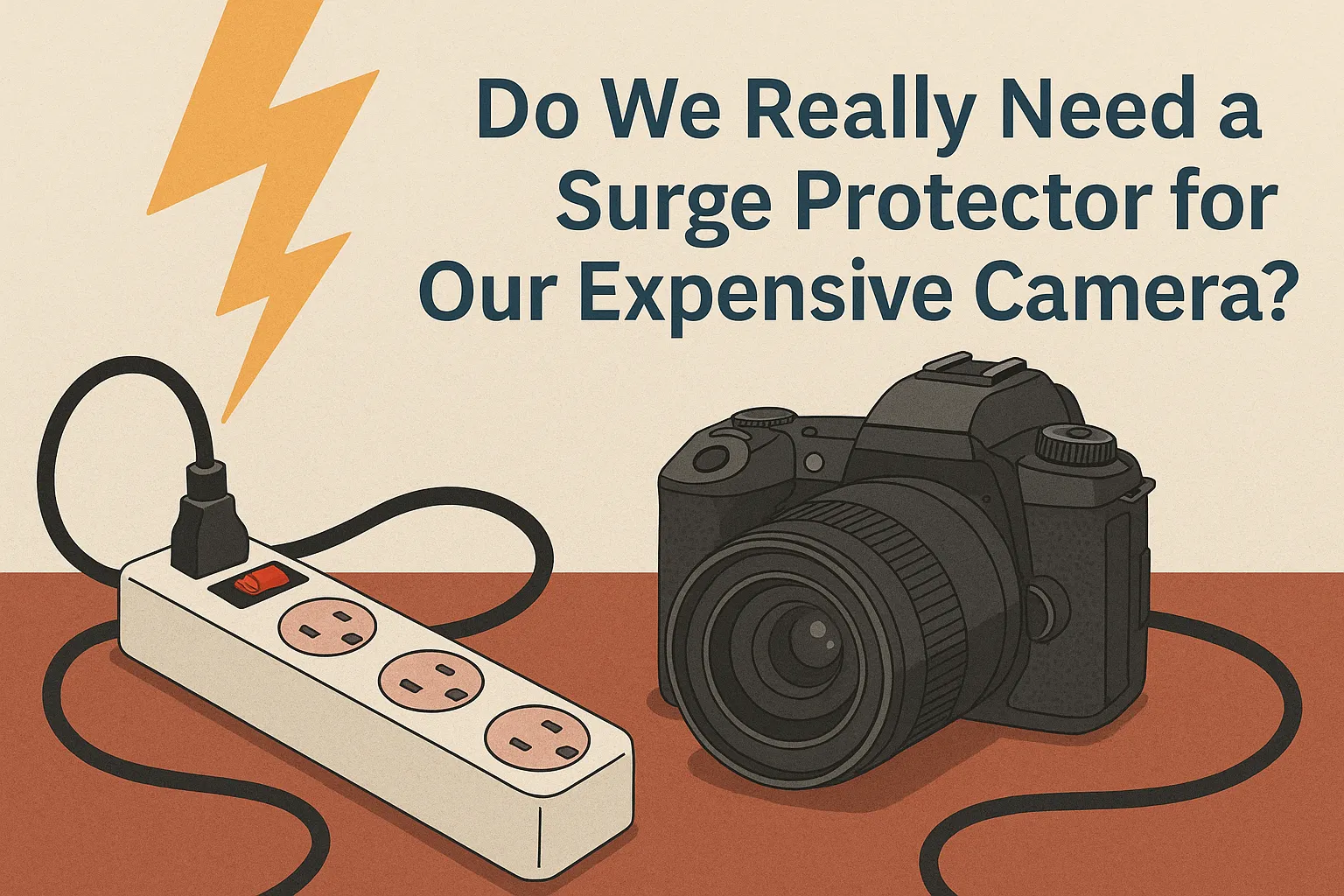
Don’t let a sudden power surge wipe out your valuable camera gear. The last thing you want is to be caught off guard when a burst of electricity can damage your equipment in an instant. That’s where a surge protector comes in – a simple and effective way to safeguard your investment and ensure you’re always ready to capture the moment. By acting as a barrier between your camera and the electrical supply, it prevents damage to sensitive components, giving you peace of mind and protecting your gear from unexpected shocks.
What is a Surge Protector for Camera Equipment?
*Disclaimer: Your camera is only affected when you connect it to a desktop/laptop or a power supply for charging or retrieval of photo etc. If you have CCTVs at home, you will definitely need to protect them with a surge protection device.
Definition and Purpose
A surge protector for camera equipment is a device designed to shield your camera from sudden voltage spikes. These spikes, often caused by electrical surges, can damage sensitive components like image sensors and processors. Surge protectors work by keeping surge voltage within safe thresholds. They discharge excessive currents to the ground, ensuring your camera remains unharmed. These devices are typically installed in parallel with your equipment, offering effective protection against lightning strikes and other electrical disturbances.
How It Works to Protect Electronics
Surge protectors act as a barrier between your camera and harmful voltage spikes. When a surge occurs, the device redirects excess voltage away from your camera. This prevents the surge from reaching and damaging delicate electronics. Surge protection devices also discharge excessive currents to the ground, ensuring your camera’s safety.
For complete protection, you should plug your camera into a surge protection device whenever you are charging it or connected to the desktop for downloading of photo and so on. This setup ensures that no surge can bypass the protective barrier.
Common Causes of Electrical Surges
Electrical surges can originate from both external and internal sources. Lightning strikes are a common external cause, either directly hitting your camera or nearby structures. Internally, surges can result from poor wiring, overloading surge protectors, or inductive loads like motors and compressors. These surges can occur unexpectedly, making it essential to have a reliable surge protector for camera equipment in place.
Why Your Camera Needs a Surge Protector
Risks of Electrical Surges to Cameras
Electrical surges pose a significant threat to your camera. These sudden spikes in voltage can overwhelm the delicate circuits inside your device. Components like the image sensor, processor, and memory card are particularly vulnerable. Even a small surge can disrupt their functionality, leaving your camera unusable. If you use your camera in areas prone to lightning storms or unstable power supplies, the risk increases.
Without proper surge protection, your camera remains exposed to these dangers.
Examples of Damage from Power Surges
Power surges can cause various types of damage to your camera. A severe surge might fry the internal circuitry, rendering the device completely inoperable. In some cases, the surge can corrupt your memory card, leading to the loss of valuable photos and videos. If you connect your camera to other devices, like a computer or external monitor, the surge can travel through the cables and damage those devices as well.
Installing a surge protection device at the camera can prevent these issues and keep your equipment safe.
Financial and Emotional Costs of Camera Damage
Repairing or replacing a damaged camera can be expensive. High-end cameras often cost thousands of dollars, and repairs for fried circuits or sensors are rarely cheap. Beyond the financial burden, losing your camera can take an emotional toll. Imagine losing irreplaceable photos or being unable to capture important moments because your equipment failed.
A surge protector for camera equipment is a small investment that saves you from these potential losses. It ensures your camera stays protected, giving you peace of mind.
Benefits of Using a Surge Protector for Camera
Preventing Costly Repairs or Replacements
A surge protector for camera equipment saves you from expensive repairs or replacements. Electrical surges can damage sensitive components like image sensors and processors, leaving your camera inoperable. Surge protectors maintain voltage within safe limits, ensuring these delicate parts remain unharmed. They also discharge excessive currents to the ground, shielding your camera from electrical disturbances.
Outdoor cameras (security cameras), especially those used in areas prone to lightning, benefit greatly from this protection. Without a surge protection device, even a minor surge could lead to costly consequences.
Peace of Mind for Photographers
Using a surge protector gives you peace of mind. You no longer need to worry about unexpected power surges damaging your equipment. Whether you’re shooting in a studio or outdoors, you can focus on capturing the perfect shot without distractions. Knowing your camera is protected allows you to work confidently, even in environments with unstable power supplies.
This assurance is invaluable, especially for professional photographers who rely on their equipment for their livelihood.
Extending the Lifespan of Your Camera
Surge protectors help extend the lifespan of your camera. Power surges can cause wear and tear on internal components, gradually degrading their performance. By preventing this damage, surge protection ensures your camera operates efficiently for a longer time. This means you can enjoy years of reliable use without worrying about premature failures.
Protecting CCTV cameras and other photography equipment with a surge protector is a smart way to maximize your investment and keep your gear in top condition.
How to Choose the Right Surge Protector for Camera Equipment
Key Features to Look For
When selecting a surge protector for your camera, you should focus on specific features that ensure optimal protection. Here’s a breakdown of the most important ones:
|
Feature |
Description |
|---|---|
|
Indicates the highest current or voltage the surge protector can safely redirect. Exceeding this limit may damage the protector. |
|
|
Breakdown Voltage |
The voltage level at which the surge protector activates. It ensures the device responds promptly to surges. |
|
Clamping Voltage |
The maximum voltage allowed to pass through the protector. Lower clamping voltage offers better protection for sensitive electronics. |
|
Response Time |
Measures how quickly the surge protector reacts to a surge. Faster response times reduce the risk of damage. |
|
Insertion Loss |
Refers to the slight signal degradation caused by the protector. Minimal insertion loss is ideal for maintaining performance. |
These features help you evaluate the effectiveness of a surge protection device and ensure it meets your camera’s needs.
Types of Surge Protectors for Cameras
Different types of surge protectors cater to various camera setups. Understanding these options helps you make an informed choice:
-
AC Power: Protects all connected equipment from transient impulses in the power system.
-
DC Power: Installed directly at the camera to isolate it from surges on long wire runs.
-
Coaxial: Shields cameras from surges traveling through long cable runs, requiring installation at both ends.
-
Data: Safeguards RS-485 data lines, essential for PTZ cameras, by blocking surge impulses.
-
Ethernet: Protects network devices and POE cameras from transients on Category 5 or 6 cables.
-
Rackmount (Head-End): Offers comprehensive protection for multiple connections in a surveillance system.
For analog cameras, you can choose surge protectors that handle video only or those that also manage power and control signals. For IP/PoE cameras, ensure compatibility with RJ45 interfaces and consider clamping voltage requirements.
Tips for Proper Usage and Maintenance
To maximize the effectiveness of your surge protection setup, follow these best practices:
-
Install surge protection devices on all wiring entering or exiting a building.
-
Place surge protectors directly on the electrical service panel and individual equipment.
-
Use grounding straps connected to a nearby grounding system for outdoor cameras.
-
Install coaxial surge protectors at both the camera and the head-end of the system.
-
Regularly inspect and replace surge protectors showing signs of wear or damage.
Proper installation and maintenance ensure your surge protector for camera equipment performs reliably, safeguarding your investment.
Electrical surges pose a serious risk to your expensive camera equipment. A surge protection device shields your camera from harmful voltage spikes, ensuring its safety and longevity. Proper installation and grounding enhance this protection, especially for outdoor setups. Security camera surge protection also prevents costly repairs and reduces fire hazards.
Lightning protection safeguards your gear from unpredictable strikes, offering peace of mind. Investing in a surge protector is a simple yet effective way to protect your valuable equipment.