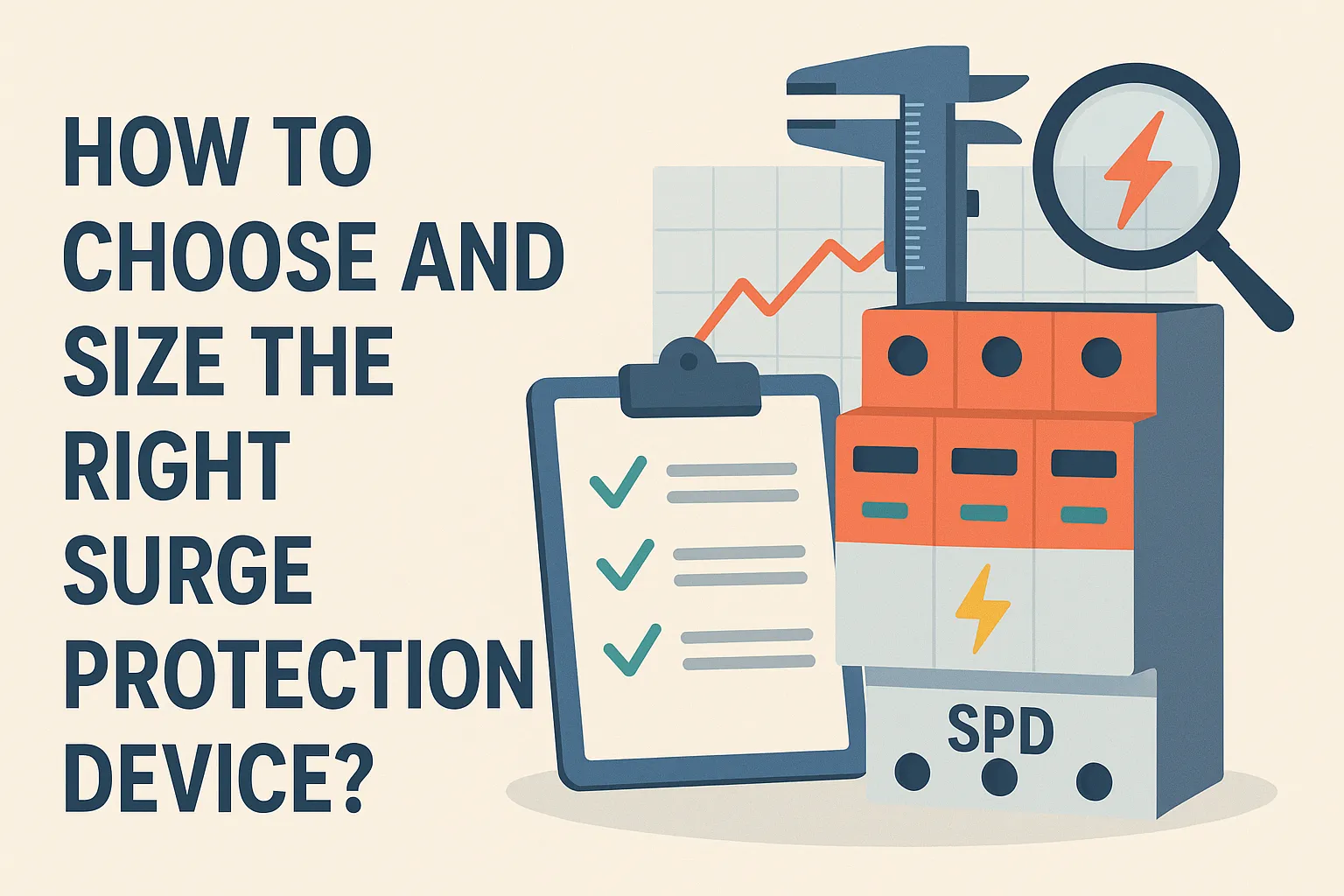
Picking the appropriate surge protection device is necessary for protecting your electrical systems. If you choose the wrong size, the consequences can be serious, potentially causing equipment damage, data loss, or even fires. Surge protectors with insufficient capacity have been implicated in numerous fires, highlighting the importance of proper selection for safety. Without adequate protection, your devices are at risk of a shorter lifespan, decreased productivity, and expensive repairs.
To ensure safety and efficiency, you must understand how to size surge protection device correctly. Factors such as system voltage, surge current capacity, and environmental conditions play a vital role in this process. Taking these into account helps you avoid hazards and extend the life of your equipment.
Understanding Surge Protection Devices
What is a Surge Protection Device?
A surge protection device (SPD) is a critical tool designed to shield your electrical systems from sudden voltage spikes. These spikes, also known as surges, can occur due to lightning strikes, power outages, or switching operations in the grid. SPDs act as a barrier, preventing excess voltage from damaging your appliances and electronics.
SPDs rely on two main types of components: voltage-limiting and voltage-switching elements. Voltage-limiting components, like metal oxide varistors (MOVs) and transient voltage suppression (TVS) diodes, change their impedance to suppress transient voltages. Voltage-switching components, such as gas discharge tubes (GDTs) and spark gaps, switch on when the voltage surpasses a certain level, diverting the surge to ground.
These mechanisms ensure your devices remain protected during unexpected power surges.
Why Are Surge Protection Devices Important?
Surge protection devices play a vital role in maintaining the safety and longevity of your electrical systems. They mitigate risks associated with lightning currents and transient over-voltages, ensuring stable operation of your equipment. For residential and industrial settings, SPDs offer several benefits:
|
Benefit |
Description |
|---|---|
|
Protection from damage |
SPDs shield appliances and electronics from power surge damage. |
|
Cost avoidance |
They help you avoid expenses related to replacing damaged equipment. |
|
Peace of mind |
Knowing your home or business is safeguarded against surges provides confidence and security. |
With SPDs in place, you can also lower maintenance expenses, prolong the life of your equipment, and protect important data from damage or loss.
How Surge Protection Devices Work
SPDs operate by limiting transient voltage and redirecting excess current to the ground. When a surge occurs, the SPD detects the rise in voltage. Components like MOVs act as pressure-sensitive valves, reducing resistance during high voltage levels and increasing it when voltage returns to normal. This dynamic response ensures that only safe voltage levels reach your devices.
A common misconception is that higher nominal discharge current ratings always mean better performance. However, these ratings indicate specific abnormal conditions, not the SPD’s overall reliability. Understanding how SPDs function helps you choose the right one for your needs and avoid such misunderstandings.
Types of Surge Protection Devices and Their Applications
Surge protective devices come in three main types, each designed for specific applications. Understanding these types helps you select the right device for your electrical system.
Type 1 Surge Protection Devices
Type 1 surge protective devices are installed at the main electrical panel. These devices handle high-energy surges from external sources, such as lightning strikes or utility grid switching. They act as the first line of defense, protecting your entire electrical system at the service entrance.
In commercial buildings, Type 1 devices are essential for safeguarding sensitive equipment. They prevent damage caused by voltage spikes and reduce the risk of data loss or downtime. These devices are useful in large buildings, industrial facilities, and areas prone to lightning.
|
Application Scenario |
Description |
|---|---|
|
Large Buildings |
Protect against surges from external sources like lightning. |
|
Industrial Facilities |
Prevent damage from high-energy surges. |
|
Areas Prone to Lightning |
Safeguard electrical systems from lightning strikes. |
Type 2 Surge Protection Devices
Type 2 devices are installed at sub-panels or branch circuits. They manage moderate to high-energy transients and provide localized surge protection. These devices serve as a backup to Type 1 SPDs, ensuring comprehensive protection for your electrical system.
In residential applications, Type 2 devices protect expensive appliances and electronics from electrical failures. They also reduce maintenance costs and extend the lifespan of your equipment. For example, they shield your HVAC systems, refrigerators, and other critical devices from power surges.
|
Advantage |
Description |
|---|---|
|
Localized Surge Management |
Effectively manage localized surges and moderate-energy transients. |
|
Backup Protection |
Provide additional protection to Type 1 devices for residential setups. |
Type 3 Surge Protection Devices
Type 3 devices are installed at the point of use, such as directly at an outlet or near individual equipment. These devices handle lower-level surges and protect specific appliances or electronics. They are ideal for safeguarding sensitive devices like computers, televisions, and gaming consoles.
When installing Type 3 SPDs, you must follow specific requirements. For example, they should be installed on the load side of branch-circuit overcurrent protection. Additionally, the connection distance from the service panel must be at least 10 meters (30 feet) if specified by the manufacturer.
|
Requirement |
Description |
|---|---|
|
Installation Location |
Installed on the load side of branch-circuit overcurrent protection. |
|
Conductor Distance |
Connection must be at least 10 m (30 ft) from the service panel if required. |
Each type of surge protective device plays a unique role in protecting your electrical system. Choosing the right type ensures your equipment stays safe from power surges.
Choosing the Right Type for Your Needs
Choosing the right surge protection device (SPD) depends on your electrical system and the level of protection you need. Each type of SPD serves a specific purpose, so understanding their applications helps you make an informed decision.
-
Evaluate Your Electrical Setup
Start by identifying the structure of your electrical system. For homes or small offices, you may only need Type 2 or Type 3 SPDs. Larger buildings or industrial facilities often require a combination of all three types. For example, Type 1 devices protect the main service entrance, while Type 2 and Type 3 devices safeguard branch circuits and individual equipment. -
Consider the Risk of Surges
Assess the likelihood of power surges in your area. If you live in a region prone to lightning strikes, Type 1 SPDs are essential. These devices handle high-energy surges from external sources. In contrast, areas with stable power grids may only require Type 2 or Type 3 SPDs for localized protection. -
Match the SPD to Your Equipment
Think about the devices you want to protect. Sensitive electronics like computers and gaming consoles benefit from Type 3 SPDs. For HVAC systems or refrigerators, Type 2 SPDs provide adequate protection. Industrial machinery often requires the robust defense of Type 1 SPDs. -
Combine SPDs for Comprehensive Protection
Using multiple types of SPDs creates a layered defense. For example, installing a Type 1 SPD at the service entrance and Type 2 devices at sub-panels ensures your entire system stays protected. Adding Type 3 SPDs near critical equipment offers an extra layer of safety.
|
Type of SPD |
Best For |
Example Applications |
|---|---|---|
|
Type 1 |
High-energy surges |
Lightning-prone areas, large buildings |
|
Type 2 |
Moderate-energy transients |
Homes, offices, HVAC systems |
|
Type 3 |
Low-level surges, sensitive devices |
Computers, TVs, gaming consoles |
Choosing the right SPD ensures your electrical system stays safe and efficient. Tailor your selection to your specific needs for the best results.
How to Size Surge Protection Device: A Step-by-Step Guide
Step 1: Determine System Voltage and Configuration
The first step in learning how to size surge protection device is understanding your system’s voltage and configuration. This ensures the surge protection device matches your electrical setup and operates effectively. Start by assessing the specific requirements of your system.
Identify the type of power supply (single-phase or three-phase) and the operating voltage. These details help you select a device that aligns with your system’s needs.
Consider the installation location. Devices installed closer to the main circuit often require higher surge current capacity. For example, a Type 1 SPD at the service entrance must handle high-energy surges. Certification and compliance are also critical. Choose devices that meet international standards like UL 1449 or IEC 61643 for reliability and safety.
Finally, balance your budget with the level of protection required. A device with a longer warranty often indicates better durability and reliability.
Step 2: Assess Surge Current Capacity Requirements
Surge current capacity determines how much energy a device can handle during a surge. To size surge protection device correctly, you must evaluate the potential surge levels in your system.
For service entrances, aim for a capacity of 300 kA. Distribution panels typically require 200 kA, while branch panels need around 100 kA per phase. These values ensure the device can withstand surges without failing.
The surge waveform standard also plays a role. Type 1 devices follow the 10/350 waveform, while Type 2 and Type 3 devices use 8/20 and 1.2/50 waveforms, respectively. Matching the surge current capacity to your system’s needs prevents underperformance and ensures long-term protection.
|
Type of SPD |
Surge Waveform Standard |
Recommended Surge Current Capacity |
|---|---|---|
|
Type 1 |
10/350 |
300 kA |
|
Type 2 |
8/20 |
200 kA |
|
Type 3 |
1.2/50 |
100 kA per phase |
Step 3: Verify Compliance with Standards and Certifications
Compliance with industry standards ensures the device’s reliability and safety. When choosing an SPD, look for certifications like UL 1449 or IEC 61643. These standards test devices for performance under various conditions, including high-energy surges and transient over-voltages. A certified device provides peace of mind and guarantees it meets stringent safety requirements.
Check the manufacturer’s warranty. A longer warranty often reflects the product’s quality and durability. Devices with robust certifications and warranties are more likely to perform well over time, reducing the risk of equipment damage or failure.
Step 4: Evaluate Installation Location and Environmental Factors
The installation location plays a critical role in determining the effectiveness of your surge protection device (SPD). You need to assess the environment where the SPD will operate to ensure it performs optimally and lasts longer.
Start by identifying the physical conditions of the installation site. Locations exposed to extreme temperatures, high humidity, or corrosive elements require SPDs with robust enclosures. Look for devices rated for harsh environments, such as those with IP (Ingress Protection) ratings. For example, an IP65-rated SPD offers protection against dust and water, making it suitable for outdoor installations.
Next, consider the proximity of the SPD to the equipment it protects. A shorter connection distance reduces the risk of voltage drops and ensures faster response times during surges. If the SPD is installed far from the equipment, use conductors with low impedance to maintain efficiency.
Environmental factors like lightning-prone areas or industrial zones with frequent electrical noise also influence your choice. In regions with high lightning activity, prioritize SPDs with higher surge current capacities. For industrial settings, select devices designed to handle electrical disturbances caused by heavy machinery.
Tip: Always check the manufacturer’s guidelines for installation requirements. Proper placement and environmental considerations can significantly enhance the SPD’s performance and lifespan.
|
Environmental Factor |
Recommended SPD Feature |
Example Use Case |
|---|---|---|
|
High Humidity |
Corrosion-resistant enclosure |
Coastal areas |
|
Lightning-Prone Areas |
High surge current capacity |
Rural regions with frequent storms |
|
Industrial Noise |
Noise-filtering capabilities |
Factories with heavy equipment |
|
Outdoor Installations |
IP-rated enclosures |
External service panels |
Step 5: Consider Historical Surge Data and Risk Assessment
Understanding the history of power surges in your area helps you make informed decisions when sizing an SPD. Analyze past surge events to estimate the potential risks and select a device that can handle them effectively. Begin by reviewing utility company reports or consulting local electricians for data on surge frequency and intensity. Areas with frequent power outages or unstable grids often experience more surges.
If you live in such a region, choose an SPD with a higher nominal discharge current rating to ensure adequate protection.
Conduct a risk assessment for your specific setup. Identify critical equipment that requires protection, such as servers, medical devices, or industrial machinery. Evaluate the financial impact of equipment downtime or replacement. This assessment helps you prioritize the level of protection needed for each device.
Consider the types of surges most likely to occur. Lightning-induced surges demand SPDs with high-energy handling capabilities, while transient over-voltages from switching operations require devices with fast response times. Matching the SPD to the surge type ensures reliable performance.
|
Risk Factor |
Recommended SPD Specification |
Example Scenario |
|---|---|---|
|
Frequent Power Outages |
High nominal discharge current rating |
Unstable utility grids |
|
High-energy surge handling |
Rural or open areas |
|
|
Critical Equipment |
Low let-through voltage |
Data centers or hospitals |
|
Switching Operations |
Fast response time |
Industrial facilities |
Additional Considerations for Choosing a Surge Protection Device
Environmental and Climatic Conditions
Environmental factors significantly impact the performance and lifespan of surge protection devices (SPDs). You need to evaluate the conditions where the SPD will operate to ensure it functions reliably. For outdoor installations, choose devices with high IP (Ingress Protection) ratings. For example, an IP65-rated SPD resists dust and water, making it ideal for areas exposed to rain or debris.
In regions with high humidity or corrosive environments, select SPDs with enclosures designed to withstand these challenges. Coastal areas often require corrosion-resistant materials to prevent premature failure. Extreme temperatures also affect SPD performance. Devices rated for wide temperature ranges ensure consistent protection in both hot and cold climates. Lightning-prone areas demand SPDs with higher surge current capacities. These devices handle the intense energy from lightning strikes, reducing the risk of damage.
Industrial zones with frequent electrical noise benefit from SPDs equipped with noise-filtering capabilities. These features protect sensitive equipment from voltage fluctuations caused by heavy machinery.
Compatibility with Existing Electrical Systems
Ensuring compatibility between your SPD and your electrical system is crucial for effective protection. Start by verifying the system’s voltage, frequency, and configuration. For example, single-phase systems require different SPDs than three-phase systems. Matching these parameters prevents operational issues.
Evaluate the capacity of the SPD to support your devices. An undersized device may fail during a surge, leaving your equipment vulnerable. Professional installation ensures proper integration with your system. Licensed electricians can verify compliance with local electrical codes and ensure correct grounding. Grounding is essential for SPD performance.
Poor grounding increases the risk of failure during surges.
For comprehensive protection, consider a cascaded SPD setup. Install Type 1 devices at the service entrance, Type 2 devices at sub-panels, and Type 3 devices near sensitive equipment. This layered approach ensures every part of your system receives adequate protection.
Note: Proper grounding and short, straight cable connections minimize resistive paths, enhancing SPD efficiency.
Maintenance and Longevity of the Device
Regular maintenance extends the lifespan of your SPD and ensures reliable performance. Begin by monitoring for sustained over-voltage conditions. These conditions can cause overheating and damage to the device. Replace aging SPDs to maintain effective protection. Over time, components like MOVs degrade, reducing the SPD’s ability to handle surges.
Pick SPDs with appropriate kA ratings for your system. Devices with higher ratings handle larger surges, reducing wear and tear. Implement a maintenance schedule to inspect SPDs periodically. Check for physical damage, loose connections, or signs of overheating.
In commercial settings, follow professional guidelines for maintenance. Evaluate grounding for compliance with the National Electrical Code (NEC). Ensure all outlets have proper polarity and impedance below 1 ohm. Familiarize yourself with standards like UL1449 and IEEE Std. C62.45 to assess SPD performance.
Professional Recommendations and Installation Guidelines
Proper installation of surge protection devices (SPDs) ensures their effectiveness and longevity. Following professional recommendations helps you avoid common pitfalls and maximize the safety of your electrical system.
1. Consult a Licensed Electrician
Always involve a licensed electrician when installing SPDs. They understand local electrical codes and ensure compliance with safety standards. Incorrect installation can lead to device failure or even electrical hazards. A professional evaluates your system’s configuration and selects the best SPD for your needs.
2. Prioritize Proper Grounding
Grounding plays a critical role in SPD performance. Ensure the grounding system has low impedance to allow surges to dissipate effectively. Poor grounding increases the risk of equipment damage. Use short, straight connections between the SPD and the grounding system to minimize resistance.
3. Follow Manufacturer Guidelines
Each SPD comes with specific installation instructions. Adhering to these guidelines ensures optimal performance. For example, some devices require a minimum distance from the service panel or specific conductor sizes. Ignoring these details can compromise the SPD’s ability to protect your equipment.
4. Use a Cascaded Protection Approach
Layered protection enhances the safety of your electrical system. Install Type 1 SPDs at the service entrance, Type 2 devices at sub-panels, and Type 3 devices near sensitive equipment. This approach creates multiple barriers against surges, reducing the risk of damage.
5. Regularly Inspect and Maintain SPDs
Routine inspections help you identify issues before they escalate. Check for signs of wear, such as discoloration or loose connections. Replace SPDs that have reached the end of their lifespan to maintain reliable protection.
|
Recommendation |
Why It Matters |
Example Action |
|---|---|---|
|
Consult a Licensed Electrician |
Ensures compliance with safety codes |
Hire a certified professional |
|
Prioritize Proper Grounding |
Improves surge dissipation |
Use low-impedance grounding |
|
Follow Manufacturer Guidelines |
Optimizes device performance |
Read and apply installation manual |
|
Use Cascaded Protection |
Provides layered defense |
Combine Type 1, 2, and 3 SPDs |
|
Inspect and Maintain SPDs |
Extends device lifespan |
Schedule regular inspections |
Tip: Keep a record of your SPD installations, including model numbers and installation dates. This helps you track maintenance schedules and ensures timely replacements.
Proper installation and adherence to professional recommendations protect your equipment and ensure long-term reliability. Take these steps seriously to safeguard your electrical system effectively.
Common Mistakes to Avoid When You Size Surge Protection Device
Selecting the Wrong Type of SPD
Choosing the wrong type of surge protection device (SPD) can leave your electrical system vulnerable. Each type of SPD—Type 1, Type 2, and Type 3—serves a specific purpose. For example, Type 1 SPDs protect against high-energy surges from external sources like lightning, while Type 3 SPDs safeguard sensitive electronics at the point of use.
Using a Type 3 SPD where a Type 1 is needed can result in insufficient protection, exposing your equipment to damage.
To avoid this mistake, evaluate your system’s structure and the risks it faces. For instance, homes in lightning-prone areas require Type 1 SPDs at the service entrance. On the other hand, offices with sensitive devices like computers benefit from Type 3 SPDs installed near the equipment. Matching the SPD type to your specific needs ensures comprehensive protection.
Underestimating Surge Current Capacity
Underestimating the surge current capacity of an SPD is a common error that can have serious consequences. The surge current capacity determines how much energy the device can handle during a surge. If you choose an SPD with insufficient capacity, it may fail during a surge, leaving your equipment unprotected.
Potential consequences of underestimating surge current capacity include:
-
Equipment damage due to inadequate protection.
-
Failure of the surge protection device itself.
-
Increased safety hazards, such as electrical fires.
To size the SPD correctly, consider the surge levels your system might encounter. For example, service entrances often require SPDs with a capacity of 300 kA, while branch panels may need around 100 kA per phase. Always match the surge current capacity to your system’s requirements to ensure reliable performance.
Ignoring Compliance and Certification Requirements
Ignoring compliance and certification requirements can compromise the safety and reliability of your SPD. Certifications like UL 1449 in the United States or IEC 61643 globally ensure that the device meets stringent safety standards.
Without these certifications, you risk using a device that may not perform as expected during a surge.
|
Region |
Standard/Certification |
|---|---|
|
United States |
UL 1449, the Standard for Surge Protective Devices (SPDs) |
|
Canada |
CSA C22.2 NO. 269 Series of SPD Standards |
|
Mexico |
NOM-003-SCFI (NMX-J-515-ANCE) |
|
Global Markets |
IEC/EN 61643-11, -311, -321, -331, IEC 61643-31, IEC 61051 |
Misunderstandings about certifications can also lead to poor decisions. For instance, some assume that a higher nominal discharge current rating guarantees better safety. However, this rating reflects specific conditions and does not always indicate overall reliability.
Always verify that your SPD complies with the relevant standards for your region to ensure optimal protection.
Overlooking Environmental and Installation Factors
Ignoring environmental and installation factors can compromise the performance of your surge protection device (SPD). These factors directly affect the device’s ability to protect your equipment and ensure safety.
You must evaluate these conditions carefully before selecting and installing an SPD.
Environmental Factors to Consider
Environmental conditions, such as temperature, humidity, and exposure to corrosive elements, can degrade SPDs over time. For example, high humidity can cause internal components to corrode, reducing the device’s lifespan. Extreme temperatures, whether hot or cold, can also impact the SPD’s performance. Devices installed outdoors or in industrial settings often face these challenges.
To address these issues, choose SPDs with appropriate ratings. Look for devices with high IP (Ingress Protection) ratings for outdoor installations. For example, an IP65-rated SPD resists dust and water, making it suitable for harsh environments. In coastal areas, select corrosion-resistant materials to prevent premature failure.
|
Environmental Condition |
Recommended SPD Feature |
Example Use Case |
|---|---|---|
|
High Humidity |
Corrosion-resistant enclosure |
Coastal regions |
|
Extreme Temperatures |
Wide operating temperature range |
Outdoor installations |
|
Dusty Environments |
High IP rating (e.g., IP65) |
Industrial zones |
|
Lightning-Prone Areas |
High surge current capacity |
Rural or open areas |
Installation Factors to Avoid
Improper installation can render even the best SPD ineffective. Long conductor lengths, for instance, increase resistance and reduce the device’s ability to redirect surges. Poor grounding further exacerbates this issue, leaving your equipment vulnerable.
To ensure proper installation, keep conductor lengths as short and straight as possible. This minimizes resistance and improves the SPD’s response time. Verify that the grounding system has low impedance to allow surges to dissipate effectively. Always follow the manufacturer’s installation guidelines to avoid common mistakes. Neglecting these factors can lead to equipment damage, increased maintenance costs, and safety hazards. Addressing environmental and installation considerations ensures your SPD operates reliably and protects your electrical system effectively.
Choosing and sizing the right surge protection device (SPD) involves several critical steps. You need to ensure the device matches your system’s voltage, surge current capacity, and environmental conditions. Always select SPDs that conform to UL-certified safety standards and are designed for specific zones of protection.
Proper grounding and compliance with the National Electrical Code (NEC) further enhance safety and effectiveness.
Consulting professionals ensures correct installation and tailored advice for your needs. Licensed electricians provide technical support and help you select the best SPD for your setup. Regular maintenance, such as inspecting for wear and replacing aging devices, keeps your system protected. Following these steps safeguards your equipment, reduces risks, and extends its lifespan.