When you search for the best surge protector for stereo equipment, you want features that go beyond basic safety. Look for three-line protection, high joule rating, and strong noise filtration. Audiophile setups need surge protectors that match your system’s technical requirements and keep working after many surges. Reliable build quality and advanced options, like non-MOV technology or internal surge isolation, help protect your investment.
Let’s check out which features give your stereo the protection it deserves.
Essential Protection for Stereo Equipment
You care about your sound system, so you want the best surge protector for stereo equipment. Let’s break down the features that make a real difference in surge protection and power protection for your high-priced equipment.
Three-Line Protection
When you look for surge protection, three-line protection stands out as a must-have. This means your surge protector for stereo equipment guards the hot, neutral, and ground wires. Why does this matter? Surges can hit any of these lines, and your stereo gear needs full coverage. Two-line models only protect hot and neutral, leaving a gap in your defense. Three-line protection gives you peace of mind, knowing your audiophile setup is safe from unpredictable electrical events.
Tip: Always check the specs for three-line protection. It’s a simple way to boost safety and extend the life of your equipment.
High Joule Rating
Not all surges are the same. Some are small and frequent, while others are rare but powerful. You want a surge protector for stereo equipment with a high joule rating. For high-fidelity audio systems, aim for at least 1,000 to 2,000 joules. If you have critical or high-end gear, go for 2,500 joules or more. A higher joule rating means your surge protector can absorb more energy before it wears out. This extends the lifespan and protection capabilities of your device.
Surge protectors with high joule ratings handle more surges over time. They keep your equipment safe, but remember, their protection decreases after each big hit.
Replace your surge protector after major surges to keep your system secure.
Non-MOV Technology
Traditional surge protectors use Metal Oxide Varistors (MOVs). These work well at first but degrade with each surge. For an audiophile surge protector, you might want to look at non-MOV technology. Here’s a quick comparison:
|
Technology Type |
Advantages |
Disadvantages |
|---|---|---|
|
Metal Oxide Varistors |
Cost-effective, strong initial protection |
Wears out over time, not ideal for critical gear |
|
Silicone Avalanche Diodes |
Fast response, doesn’t add noise or capacitance |
Needs replacement after smaller surges |
|
Gas Discharge Tubes |
Handles large surges, great for big spikes |
Slower response, not for fast surges |
|
Hybrid Models |
Combines strengths for optimal surge-protection |
Can cost more |
Non-MOV options, like silicone avalanche diodes or hybrid models, offer fast response and don’t add extra noise. That’s a big win if you want clean audio and reliable surge protection.
Isolation from Internal/External Surges
Surges don’t just come from outside. Internal sources, like refrigerators or HVAC systems, can send spikes through your wiring. External threats include lightning, power restoration after blackouts, or even tree limbs touching power lines. Here are some common causes of surges:
-
High-powered devices (like air conditioners) switching on
-
Tripped circuit breakers
-
Faulty wiring
-
Tree limbs or animals interfering with power lines
-
Power restoration after outages
-
Lightning strikes
A high-end surge protector uses advanced features to isolate your stereo from both internal and external surges. Technologies like inrush current limiting resistors, gas discharge tubes, and TVS diodes all play a role. These components work together to absorb or redirect excess voltage, keeping your equipment safe. When you choose the best surge protector, look for these surge-protection features. They give you the power protection and auto-shutoff you need for your valuable equipment.
With the right surge-protection, you can enjoy your music without worry, knowing your system has the best protection capabilities available.
Audio Quality and Build Features
When you’re investing in a surge protector for stereo equipment, you want more than just safety—you want to hear every detail clearly. That’s where features like noise filtration and solid build quality come into play. These elements help ensure your high-end system performs at its best, delivering pure, crisp sound without interference.
Noise Filtration & Low Pass Filters
Noise filtration plays a crucial role in elevating your audio experience. When your surge protector includes effective noise filtration, you notice deeper bass, a wider soundstage, and vocals that become remarkably clearer. Instrument separation improves, allowing you to perceive subtle details like cymbal decay or breath behind lyrics. This is especially important for audiophiles who crave precision and clarity.
Low pass filters are a key part of this process. They work by allowing standard AC power—typically 50 or 60 Hz—to pass through while blocking higher-frequency noise. Powerline filters, a common type of low pass filter, significantly reduce electromagnetic interference (EMI) and radio frequency interference (RFI). These interferences can cause unwanted hums or hisses, degrading your listening experience. By filtering out these disturbances, your surge protector helps maintain a cleaner, more accurate audio signal.
EMI/RFI Filtering
EMI and RFI are sneaky culprits behind many audio issues. Without proper filtering, these electromagnetic and radio frequency interferences can introduce noise, distort sound, and diminish your system’s overall clarity. An audiophile surge protector with robust EMI/RFI filtering attenuates noise across a broad range of frequencies, ensuring your equipment receives a pristine power supply.
Many users report that adding a capacitor or a dedicated filter to their amplifier reduces audible pops caused by electrical interference. This demonstrates how effective EMI/RFI filtering contributes to a cleaner audio signal. For high-fidelity setups, manufacturers often emphasize the importance of objective performance metrics for EMI filtering, rather than just marketing claims. The goal is to minimize noise and ensure your stereo equipment performs at its peak.
Heavy-Duty Steel Construction
Durability matters when it comes to protecting your equipment. Heavy-duty steel construction not only provides a sturdy housing but also shields internal components from physical damage and electromagnetic interference. High-quality internal components like capacitors, inductors, and surge protection devices work together to absorb and redirect surges effectively.
For example, some top-tier surge protectors allow only a small voltage—around 40 volts—of a large surge to pass through, thanks to their robust construction. This level of protection ensures your high-end gear stays safe during unexpected power spikes. A well-built surge protector acts as a reliable power conditioner, extending the lifespan of your equipment and maintaining optimal performance.
Isolated Outlets
One of the most underrated features for audiophiles is isolated outlets. These outlets are designed to prevent cross-interference between digital and analog components. Each pair of outlets is magnetically isolated from others, reducing the risk of cross talk and large in-rush currents affecting your sensitive gear.
Using isolated outlets can significantly improve your sound quality.
Many users notice a widened soundstage, clearer transients, and more realistic reverb. Low-level details that were previously drowned out become audible, background silence improves, and overall sound purity increases. For your stereo setup, this means a more immersive and accurate listening experience.
Convenience & Advanced Options
You want your surge protector for stereo equipment to offer more than just basic surge protection. Convenience and advanced features make your setup easier to use and safer for your high-end gear. Let’s look at what makes the best surge protector stand out.
Outlets & Indicators
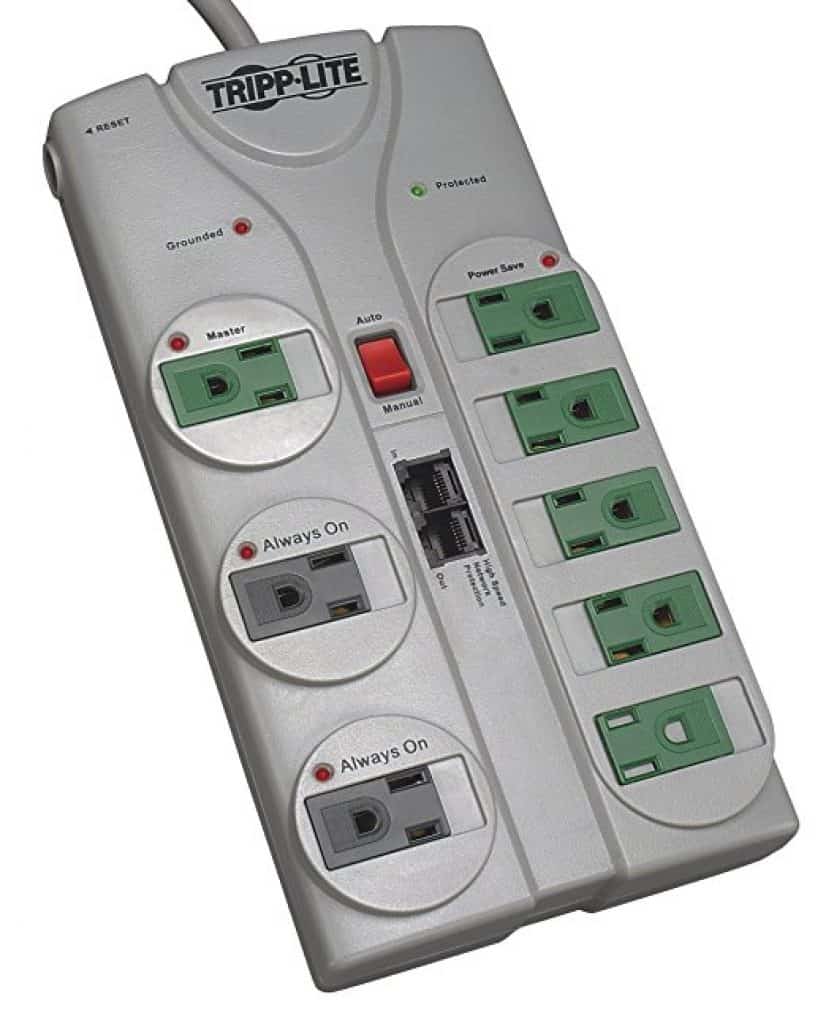
The number and type of outlets matter. You need enough grounded outlets for all your equipment, plus USB ports for modern devices. Rotating outlets help you fit larger plugs without crowding. Indicator lights and alarms boost safety and awareness. They show you if surge protection is active or if the device needs replacement. Here’s a quick guide:
|
Indicator Light Status |
Meaning |
|---|---|
|
Green light off |
Protection has failed |
|
Red light on |
Indicates damage or end of life |
|
No lights at all |
Complete system failure |
-
Indicator lights inform you when surge protection works.
-
They alert you when the surge protector needs replacement.
-
Look for surge protectors with indicator lights for proper functionality.
Smart Surge Protectors
Smart surge protectors add convenience and power protection. You can control outlets remotely, set schedules, and monitor energy use. Auto-shutoff features protect your equipment by cutting power during dangerous surges. This keeps your stereo safe and prevents damage. Smart models often include surge-protection and power conditioning, making them ideal for audiophile setups.
USB & Network Protection
Modern audio gear needs USB and network protection. ESD protection is crucial for USB Type-C ports. TVS diodes divert harmful voltage spikes, keeping your devices safe. Some surge protectors use diodes like Semtech’s µClamp2411PW and TDS2221PW, which handle up to ±20kV of ESD. You get surge protection capabilities for both USB and network connections. Here’s what you might find:
|
Feature |
Description |
|---|---|
|
Outlets |
6 grounded outlets, including 1 USB-C and 1 USB-A port |
|
Surge Protection |
1080 Joules of 3-line surge protection |
|
Rotating Outlets |
90-degree rotating outlets for larger plugs |
|
USB Power Delivery |
30-watt USB-A and USB-C ports for fast charging |
|
Reset Mechanism |
Easy-to-access power cycle button |
Warranty Coverage
Warranty coverage gives you confidence in your surge protector for stereo equipment. Brands like SnapAV and DITEK offer connected equipment replacement policies. DITEK’s warranty covers up to your insurance deductible or the cost to repair or replace damaged equipment. Panamax offers a $5,000,000 limited connected equipment protection policy. Comprehensive warranties show manufacturers invest in quality and robust surge-protection. You feel secure knowing your equipment is protected and your investment is safe.
You want the best protection for your stereo equipment. Look for surge protection rating, noise filtering, and high-current outlets. Automatic voltage monitoring and indicator lights help you spot issues fast. Choose a safety device with a connected equipment warranty. Here’s a quick checklist:
|
Feature |
Why It Matters |
|---|---|
|
Surge protection rating |
Handles voltage spikes |
|
Noise filtering |
Keeps audio clear |
|
High-current outlets |
Supports powerful gear |
|
Automatic voltage monitoring |
Detects unsafe power |
|
Connected equipment warranty |
Covers your investment |
Balance protection, audio quality, and convenience. Research new surge protectors to keep your equipment safe.
FAQ
Before you pick your surge protector, you might have a few questions. Let’s clear up some common ones!
What is the difference between a power strip and a surge protector?
A power strip only adds outlets. A surge protector shields your gear from voltage spikes. Always check for surge protection before you buy.
How often should I replace my surge protector for stereo equipment?
You should replace it every 2–3 years or after a major surge. Indicator lights can help you know when it’s time.
Can a surge protector improve my audio quality?
Yes! Models with noise filtration and EMI/RFI filtering can reduce hums and interference. You’ll hear cleaner, more detailed sound from your stereo.