A lightning strike two miles away, a utility transformer switching load, or even the compressor in an air conditioner cycling on can send a voltage spike through household wiring in a fraction of a millisecond. For most appliances, these transient surges are a minor annoyance. For an EV charger — a device that combines sensitive power electronics, continuous outdoor exposure, and a direct electrical link to a vehicle’s battery management system — the same spike can mean a damaged charging module, a tripped safety circuit, or in rare cases, a fire risk.
As EV adoption grows and chargers move from novelty to daily infrastructure, the question of how to protect them from surges has shifted from an afterthought to a design requirement.
What Actually Causes These Surges
Power surges affecting EV chargers generally come from two directions. External surges originate outside the building: lightning strikes (even indirect ones that induce current in nearby lines), utility grid switching, fault clearing on distribution lines, and voltage fluctuations from grid instability. Internal surges originate within the building’s own electrical system: large motors starting and stopping, HVAC compressors, elevators, or other high-draw equipment cycling on the same service. EV chargers are more exposed to both categories than most household electronics for a few reasons.
Level 2 chargers are frequently mounted outdoors or in garages with less environmental shielding than indoor appliances. They draw sustained high current — typically 30 to 50 amps — over long charging sessions, which means any transient event during that window has a longer opportunity to interact with active circuitry. And because the charger sits between the electrical panel and a vehicle’s onboard charging electronics, a surge that reaches the charger has a path to damage two expensive systems rather than one.
The financial stakes are not trivial.
A damaged Level 2 charger can cost several hundred to over a thousand dollars to replace, and commercial DC fast chargers represent investments in the tens of thousands of dollars per unit. For fleet operators or multi-unit charging installations, downtime from a surge-damaged charger also carries lost revenue and scheduling costs that outweigh the price of the hardware itself.
The Standards That Govern Protection
Surge protection for EV charging equipment doesn’t exist in a regulatory vacuum. The National Electrical Code (NEC), specifically Article 625, governs electric vehicle charging system installations, including circuit sizing, disconnect requirements, and grounding. UL 1449 sets performance and safety standards for surge protective devices (SPDs) themselves, categorizing them by installation location and surge current capacity. IEEE C62.41 provides testing standards for surge waveforms, giving manufacturers a common benchmark for how a device should perform under a simulated lightning or switching transient.
Together, these standards inform both what protection is required and how to verify that installed equipment meets a baseline level of performance — they don’t mandate a single “correct” surge protection setup, but they define the vocabulary and testing rigor that any credible comparison should be built on.
Three Tiers of Surge Protection Devices
SPDs are classified by where they sit in the electrical system, and each tier addresses a different part of the surge problem. Type 1 devices are installed at the service entrance, ahead of the main disconnect, and are designed to intercept the largest transients — direct or nearby lightning strikes and major utility-side switching events — before they enter the building’s wiring at all. They carry the highest surge current ratings, often 40 kA or more per phase, but they protect the building as a whole rather than any specific circuit. Type 2 devices are installed at the distribution panel or subpanel. They handle surges that either originate inside the building (motor and compressor switching) or that pass through a Type 1 device attenuated but not eliminated.
Type 2 SPDs typically carry surge ratings in the 20–40 kA range and are the most common retrofit option for existing homes, since they can be added to a panel without rewiring the service entrance.
Type 3 devices are point-of-use protectors, installed at or near the equipment itself — in this case, integrated into or mounted immediately before the EV charger. They have lower surge current ratings, generally under 10 kA, but faster clamping response times, and they catch the smaller, more localized transients that upstream devices may not fully suppress, including surges generated by the charger’s own switching electronics.
The following comparison summarizes typical characteristics of each tier:
| SPD Type | Installation Point | Typical Surge Rating | Response Speed | Approximate Cost | Best Use |
|---|---|---|---|---|---|
| Type 1 | Utility service entrance | 40+ kA | Moderate | $300–$800 installed | Lightning-prone regions, whole-property protection |
| Type 2 | Distribution/sub panel | 20–40 kA | Fast | $150–$500 installed | Standard retrofit for homes and light commercial buildings |
| Type 3 | Point-of-use (at the charger) | Under 10 kA | Fastest | $50–$250 (device or built-in) | Protecting sensitive charger electronics from residual and locally generated surges |
No single tier is sufficient on its own. A Type 1 device stops catastrophic external surges but does nothing for a surge generated by an air conditioner compressor on the same circuit as the charger. A Type 3 device at the charger protects against small local transients but would be overwhelmed by a direct lightning-induced surge that a Type 1 device is designed to absorb. This is the basis for the standard engineering recommendation: layered protection across all three tiers reduces surge-related failures far more reliably than relying on any single installation point, because each tier is engineered to catch what the others miss.
Beyond the SPD Itself
Surge protection devices matter, but they operate within a larger electrical environment that affects how well they work. Grounding quality is foundational — an SPD can only divert excess voltage effectively if it has a low-resistance path to ground; a poor grounding system undermines even a well-rated device. Dedicated circuits, run specifically for the EV charger rather than shared with other appliances, reduce the chance that switching transients from unrelated equipment reach the charger in the first place. And charger enclosures rated for outdoor exposure (typically NEMA 3R or 4 for outdoor installations) protect against moisture and debris that can create their own electrical faults independent of surge events.
A growing number of newer charger models now include integrated Type 3 surge protection as a built-in feature rather than an add-on component, reflecting manufacturer recognition that this layer of defense belongs close to the equipment it protects. Buyers evaluating chargers should check specifications for this feature explicitly, since it is not yet universal across the market.
Where the Trade-offs Lie
The obvious tension in surge protection is cost versus reliability. A Type 3 device alone is inexpensive but leaves the charger exposed to larger surges that reach the panel or service entrance. A full three-tier installation costs more upfront but distributes risk across multiple failure points, so that one device’s limitation doesn’t become the system’s single point of failure. For most residential installations, a Type 2 panel-level SPD combined with a charger that includes integrated point-of-use protection represents a reasonable middle ground; adding Type 1 protection makes the most sense in regions with frequent lightning activity or documented grid instability.
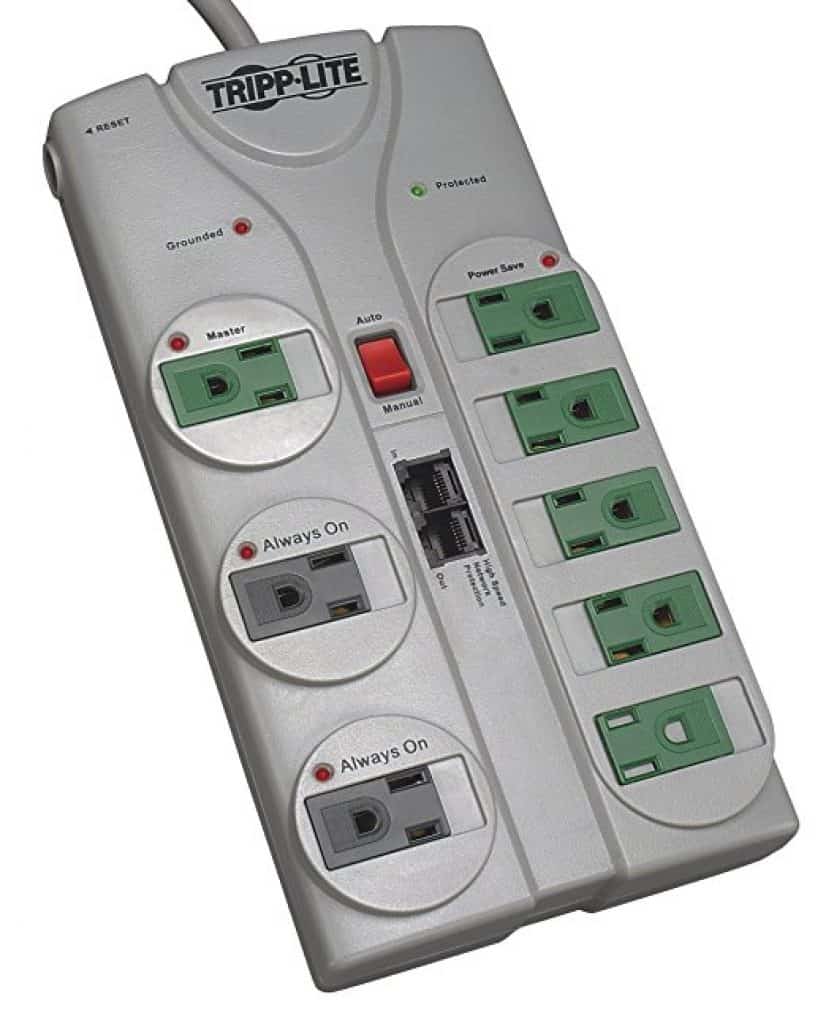
One common misconception is worth addressing directly: a standard household power strip labeled “surge protector” is not adequate for an EV charger circuit. These consumer-grade strips are rated for low-current electronics like computers and lamps, not for the sustained 30–50 amp draw of Level 2 charging, and they are not designed or tested for continuous outdoor or garage installation. Confusing this class of product with a properly rated Type 2 or Type 3 SPD is one of the more consequential gaps in consumer understanding.
It’s also worth noting the limits of this kind of comparison.
Much of the available guidance comes from standards bodies and manufacturer specifications rather than long-term field failure data specific to EV chargers, and actual surge risk varies considerably by region, grid infrastructure age, and local lightning frequency. A property in a region with buried utility lines and modern grid infrastructure faces a different risk profile than one served by overhead lines in a lightning-prone climate, and protection decisions should account for that variation rather than applying a uniform standard everywhere.
Practical Guidance
For most homeowners installing a Level 2 charger, the sensible baseline is a dedicated circuit, a panel-level Type 2 SPD, and a charger with integrated or add-on point-of-use protection. Businesses and fleet operators installing multiple chargers, or anyone in a region with frequent electrical storms or an aging grid, should have a licensed electrician assess whether service-entrance Type 1 protection is warranted given local conditions — this is a site-specific judgment that general guidance can’t fully substitute for. A licensed electrician’s inspection also serves a second purpose beyond installation: verifying that whatever protection is installed actually meets the relevant NEC and UL requirements, since a surge protector that is improperly wired or undersized for its circuit offers little real protection despite its labeling.
Looking forward, two developments are likely to reshape this picture. Bidirectional charging, which allows an EV to feed power back into a home or the grid, introduces new pathways for surges to travel between the vehicle and the electrical system, and current standards were not written with that use case in mind. And as EV chargers become more common and more standardized, there is room for more rigorous, charger-specific field data on SPD failure rates — most current guidance is extrapolated from general electrical engineering practice rather than from years of EV-specific incident tracking.
Until that data matures, layered protection built on existing standards remains the most defensible approach available.
FAQ
What happens if you skip surge protection for your EV charger?
You risk damaging your charger, your vehicle, and your home. Fires, electric shocks, and expensive repairs can result from unprotected charging stations.
How often should you inspect surge protection devices?
You should inspect residential surge protection devices once a year. Commercial charging stations need checks every six months for optimal safety.
Can you install surge protection devices yourself?
You should hire a licensed electrician for installation. Professional installation ensures safety, compliance, and proper functioning of your surge protection device.