You want your antenna to last and work well. A surge protector stops electrical surges and lightning from damaging your setup. Surges from lightning can ruin your equipment fast. With the right protection, you save money and avoid stress. Let’s look at how surges and lightning affect your antenna.
Surge Protector Benefits for Antenna
You want your antenna to work every day, no matter the weather or what’s happening with your power. That’s where a surge protector comes in.
Let’s break down what you get when you add this simple device to your setup.
Protection from Power Surges
A surge protector stands guard against electrical surges that can hit your antenna. These surges can come from many sources. Here are the most common ones:
-
Lightning strikes that send a huge voltage spike through power lines or transformers.
-
Grid faults or power switching, like when big machines turn on or off.
-
Electromagnetic interference from nearby electrical equipment.
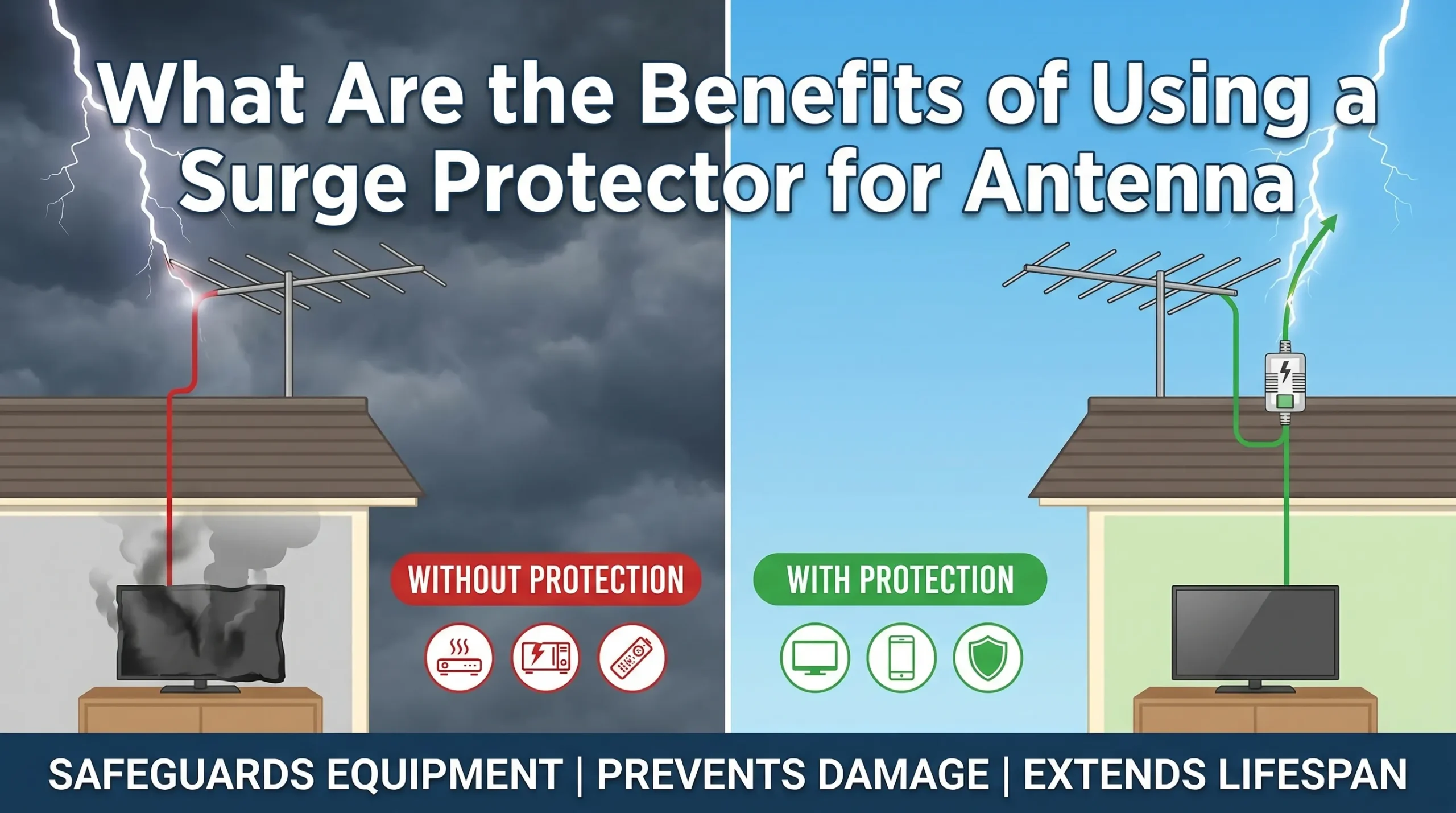
When a surge hits, a surge protector acts fast. It redirects the extra voltage away from your antenna and sends it safely into the ground. This keeps your equipment safe and your signal clear. You don’t have to worry about losing your favorite show or missing an important update because of a sudden surge.
Here’s a quick look at how a surge protector works for your antenna:
|
Functionality |
Description |
|---|---|
|
Surge protectors redirect excess voltage from lightning strikes safely to the ground. |
|
|
Protect high-frequency analog RF signals |
They are designed to handle high-frequency signals without degradation. |
|
Preserve signal integrity |
Surge protectors maintain the quality of the signal during normal operation, preventing loss. |
You might wonder if all surge protectors are the same. Some are built for big surges, like those from lightning, while others handle smaller, everyday electrical surges. The best setup uses both types for full protection. A surge protection device at the service entrance stops the biggest spikes, and another at your antenna adds another layer of defense.
Surge protectors are not effective when placed at the antenna. A surge protector or a DC connection at the antenna end of the coax is not effective. At the moment of a lightning strike on or near the antenna the voltage on the coax center conductor and the shield are equal and their voltage difference is 0V. As the voltage spike travels down the coax two physical properties of the coax will result in a voltage difference between the coax center conductor and the shield.
Industry standards help you know you’re getting real protection.
Look for surge protectors that meet certifications like UL1449 (USA), IEC 61643-11 (International), or UL 497E (USA). These standards mean the device has passed tough tests for safety and performance.
Preventing Equipment Damage
A surge protector does more than just block surges. It keeps your antenna and all connected devices safe from harm. Without a lightning surge protector, a single lightning strike or power surge can fry your equipment in seconds. You could lose your TV, radio, or even your internet connection.
Here’s what can happen if you skip surge protection:
-
Lightning can use your outdoor antenna as a path into your home, damaging everything connected.
-
Electrical surges can burn out sensitive parts inside your devices.
-
You might face expensive repairs or have to buy new equipment.
A lightning surge protector stops these problems before they start. It acts like a shield, taking the hit so your gear doesn’t have to. Insurance companies know this, too. They often require proper grounding and surge protectors for claims related to antenna damage. They understand that no system can promise total protection from lightning, but a well-designed surge protection device makes a big difference.
You also get peace of mind. You don’t have to worry every time a storm rolls in or when the power flickers. Your antenna stays safe, your signal stays strong, and you avoid costly surprises.
Why Use a Lightning Surge Protector
You might wonder what makes a lightning surge protector so important for your antenna setup, especially if you have an outdoor antenna on your roof. Lightning can strike without warning, and even a nearby strike can send a powerful surge through your system. That’s where a lightning surge protector steps in to keep your signal safe and your equipment working.
Lightning Strike Defense
A lightning surge protector acts like a shield for your antenna. When lightning hits or strikes close by, it creates a sudden surge of energy. This surge can travel down your antenna cable and damage your signal booster, TV, or radio. The lightning surge protector detects this abnormal surge and quickly diverts the extra energy to the ground.
Think of it like a fuse that absorbs or redirects the excess energy, so your equipment stays safe.
Here’s a quick comparison to help you see the difference between a standard surge protector and a lightning surge protector:
|
Feature |
Surge Protector |
Lightning Surge Protector |
|---|---|---|
|
Installation Position |
Installed on the secondary system |
Installed on the primary system |
|
Flow Capacity |
Lower current capacity |
Higher current capacity |
|
Main Material |
Varies based on design |
Mostly zinc oxide |
|
Nominal Discharge Current |
Ranges from 5kA to 30kA |
Ranges from 1.5kV to 20kV |
|
Typical Applications |
Low-voltage power distribution, signals |
Power stations, overhead lines |
A lightning surge protector gives your signal a safer path, sending the dangerous energy away from your devices. You get better protection and fewer worries during storms.
Grounding and Installation Tips
To get the most out of your lightning surge protector, you need to follow some best practices. Proper grounding is key. You should install the surge protector outside, near where the cable enters your home. Make sure the antenna mast is grounded, too. This setup helps the surge move safely into the earth instead of your living room.
Here are some tips for a safer installation:
-
Place your antenna at least 5 feet above the roof line.
-
Keep at least 10 feet between your antenna and any power lines.
-
Use ground bonding to connect all metal parts, creating a safe path for electricity.
-
Install a surge protector for each cable conductor.
-
Check that your grounding system is solid and use lightning arrestors to guide lightning away from your equipment.
⚡ Tip: Avoid long or tangled cables, poor earthing, and connecting to the wrong terminals. These mistakes can reduce the effectiveness of your surge protector and leave your signal at risk.
With these steps, you make sure your lightning surge protector works as it should. You protect your signal, your equipment, and your peace of mind from electrical surges and lightning.
Reliability and Peace of Mind
You want your antenna to work every day, not just when the weather is nice. A surge protector and a lightning surge protector give you that confidence. They do more than just block electrical surges or lightning. They help you trust your setup, knowing you have real protection against electrical damage.
Longer Equipment Life
When you use a surge protector and a lightning surge protector, you help your equipment last longer. These devices stop surges from lightning before they can reach your gear. You avoid electrical damage that can ruin your TV, radio, or internet devices. You also save money because you do not need to replace broken parts as often.
Here’s how surge protection boosts reliability for your home or business:
|
Evidence Description |
Source |
|---|---|
|
Antenna surge protectors are designed to protect sensitive communication equipment from electrical surges, such as those caused by lightning, thereby enhancing reliability. |
Telcome Surge Protector |
|
Investing in coaxial surge protection devices contributes to the overall reliability and resilience of communication networks against electrical disturbances. |
Techwin SPD |
|
Coaxial Surge Protection Devices are essential for preventing equipment damage and ensuring seamless data transmission, which is crucial for network safety. |
Britec Electric |
You get more years out of your outdoor antenna and all your connected devices. That means fewer headaches and more time enjoying your favorite shows.
Consistent Signal Quality
You want a clear signal, even during a storm. A surge protector and a lightning surge protector keep your signal steady by blocking surges from lightning and other electrical surges. Without this protection, surges can cause glitches, dropouts, or even total signal loss.
Here’s what happens when you use surge protection:
-
Surges from lightning do not reach your sensitive equipment.
-
Your signal stays strong and clear, even when the weather turns bad.
-
You avoid costly downtime and keep your system running smoothly.
-
Surge protection devices help prevent electrical damage and keep your network safe.
-
You spend less on repairs and enjoy more reliable service.
A surge protector and a lightning surge protector work together to keep your antenna safe. You get peace of mind, knowing your signal and equipment are protected from lightning and electrical surges.
You get real peace of mind when you use a surge protector with your antenna. A lightning surge protector shields your equipment from surges, lightning, and keeps your signal strong. Here’s what you gain:
-
Longer equipment life and safety
-
Fewer repairs and lower costs
-
Reliable protection every day
FAQ
You might still have a few questions about surge protectors for antennas. Here are some quick answers to help you out.
What does a surge protector actually do for my antenna?
A surge protector blocks extra voltage from reaching your antenna. It sends dangerous surges safely into the ground, keeping your equipment safe.
What should you look for in an antenna surge protector?
Look for devices with safety certifications like UL1449 or IEC 61643-11. Make sure it matches your antenna’s cable type and handles both everyday surges and lightning.