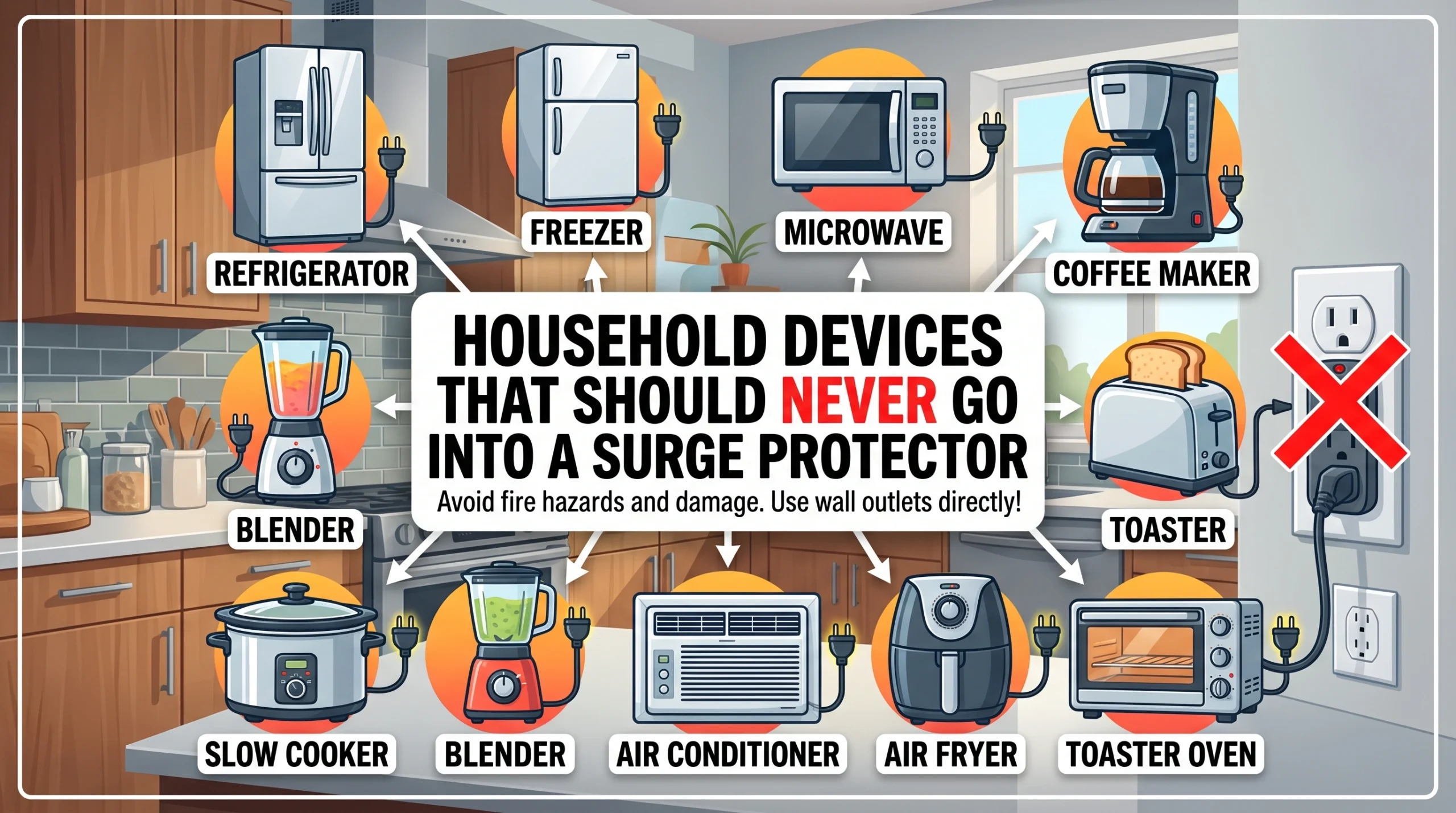
You must know what should never be plugged into a surge protector. Here are seven things to never plug into a power strip: refrigerators, freezers, microwaves, coffee makers, toasters, toaster ovens, air fryers, air conditioners, slow cookers, and blenders. These devices pose a fire hazard due to high power draw, malfunction risks, or surge protection issues. The U.S. Fire Administration reports electrical malfunctions from power strips cause nearly 51,000 home fires each year.
Electrical distribution equipment, including surge protection devices, creates potential fire hazards, responsible for 10% of all home fires. Prioritize power strip safety by plugging only low-wattage items or sensitive electronics into a surge protector.
Follow safety tips to prevent hazard and protect your home from fire hazards.
-
Never plug high-wattage appliances like refrigerators and microwaves into surge protectors. They can overload the device and cause fires.
-
Always use a dedicated wall outlet for heat-generating appliances such as coffee makers and air fryers to ensure safety and prevent overheating.
-
Daisy-chaining surge protectors is dangerous. It increases the risk of electrical malfunctions and fire hazards.
-
Regularly check your power strips for damage and avoid overloading them. Signs of overheating include warm outlets and tripped breakers.
-
Follow manufacturer guidelines for appliance usage. This helps prevent electrical fires and keeps your home safe.
Refrigerators And Freezers
When you think about household safety, you need to pay close attention to how you power large appliances like refrigerators and freezers. These appliances play a vital role in your home, but they also present unique electrical risks if you do not use them correctly.
High Power Draw Risks
Refrigerators and freezers belong to a group of appliances that use high wattage. They cycle on and off throughout the day to keep your food cold, which causes repeated power surges. Each time the compressor starts, it draws a high current. This high wattage demand can easily overload a power strip or surge protector.
-
Household power strips usually have a maximum rating of 1800 watts.
-
Experts recommend you do not exceed 960 watts on any single power strip for safety.
-
Refrigerators and freezers require a stable, dedicated outlet for efficient operation.
-
Using a power strip can lead to overheating and potential damage.
You should always plug these high-wattage appliances directly into a wall outlet. This practice helps prevent electrical overload and reduces the risk of fire.
Fire And Surge Protection Concerns
Plugging refrigerators and freezers into a surge protector creates a serious fire hazard. These appliances draw significant power, especially when their motors start. This high power demand can cause the surge protector to overheat. Overheating increases the risk of fire in your home. Surge protectors are not designed to handle the constant cycling and high current draw of these appliances. You should never use a surge protector for refrigerators, freezers, or other high-wattage appliances.
Instead, connect them directly to a wall outlet to ensure safe and reliable operation.
Tip: Always check the manufacturer’s instructions for your appliances. Most recommend direct wall outlet use for all large appliances.
Microwaves
Overload And Fire Hazards
Microwaves rank among the most common kitchen appliances, but you must understand their electrical demands before deciding where to plug them in. These devices require a significant amount of power, especially during operation. Standard power strips are not designed to handle the high wattage that microwaves draw. When you plug a microwave into a power strip, you risk overheating the strip and creating a serious fire hazard.
Electrical circuits in your home are built to handle a specific amount of electricity. Exceeding this limit can cause overheating, which may lead to electrical fires. High-wattage appliances like microwaves should never be connected to a power strip. Plugging a microwave into a power strip can cause it to trip, overheat, or fail.
You may notice signs of overload, such as flickering lights or warm outlets. These warning signs indicate that the circuit is struggling to keep up with the demand.
Manufacturers warn against plugging microwaves into surge protectors or power strips. Appliances with high power demands can lead to overheating and electrical fires when plugged into these devices. You should always follow manufacturer guidelines to prevent electrical hazards and protect your home.
Tip: If you notice any unusual behavior from your microwave, such as reduced performance or frequent tripping, unplug it immediately and check your electrical setup.
Safe Power Strip Use
To ensure safe operation, you must plug your microwave directly into a wall outlet. Microwaves need a dedicated circuit to prevent overloads and optimize performance. A 20 or 30-amp dedicated circuit provides a consistent power supply exclusively for the microwave. Compliance with electrical codes is crucial for preventing overloads and ensuring safety.
Here is a quick reference for safe microwave setup:
-
Use a dedicated circuit for your microwave.
-
Plug the microwave directly into a wall outlet.
-
Avoid using surge protectors or power strips for high-wattage appliances.
-
Check for signs of overload, such as flickering lights or warm outlets.
Following these guidelines helps you prevent electrical fires and maintain a safe kitchen environment. You protect your home and family by making smart choices about where you plug in your microwave.
Coffee Makers And Toasters
Why These Are Things You Should Never Plug Into A Power Strip
You use coffee makers and toasters every day, but you may not realize the risks involved when plugging these heat-generating appliances into a surge protector. These devices require high wattage to operate efficiently. When you plug them into a power strip, you expose your home to overload and fire hazards. Surge protectors and extension cords are not built to handle the high current that coffee makers and toasters demand. You risk overheating the power strip, which can lead to electrical fires.
Consider the electrical characteristics of these appliances:
-
Coffee makers and toasters draw significant power during operation.
-
High wattage appliances should always connect directly to a wall outlet.
-
Surge protectors cannot safely support high-current items like coffee makers and toasters.
Manufacturers recommend plugging these appliances directly into a wall outlet. You protect your home and family by following this advice. Avoid plugging heat-generating appliances into a surge protector to reduce fire risk and ensure reliable performance.
Note: Always check the wattage rating of your appliances and power strips. Exceeding the recommended limits increases the risk of overheating.
Power Strip Safety Tips
You can prevent electrical fires and keep your kitchen safe by following essential power strip safety tips. These guidelines help you use power strips responsibly and avoid dangerous situations.
-
Never use an extension cord with major appliances to prevent overheating.
-
Unplug small appliances when not in use.
-
Replace appliances with damaged cords immediately.
-
Do not overload power strips and use those with internal overload protection.
-
Replace worn or damaged extension cords right away.
-
Avoid placing cords where they can be pinched or damaged.
-
Keep flammable items away from lamps and light fixtures.
-
Use lightbulbs that match the recommended wattage.
You improve power strip safety by following these power strip safety tips. Make smart choices about where you plug in your kitchen appliances. Protect your home from electrical hazards and maintain a safe environment for your family.
Toaster Ovens And Air Fryers
Surge Protection Issues
You rely on toaster ovens and air fryers for quick meals and snacks. These devices make cooking convenient, but you must understand their electrical demands. Both appliances fall into the category of heat-generating appliances. They require substantial power to operate efficiently. Air fryers typically consume between 1200 to 1800 watts. Toaster ovens often have similar wattage requirements. Most household surge protectors and power strips are not designed to handle such high-wattage loads. When you plug these appliances into a surge protector, you risk overloading the device. Overloading can cause overheating, which increases the chance of electrical fires.
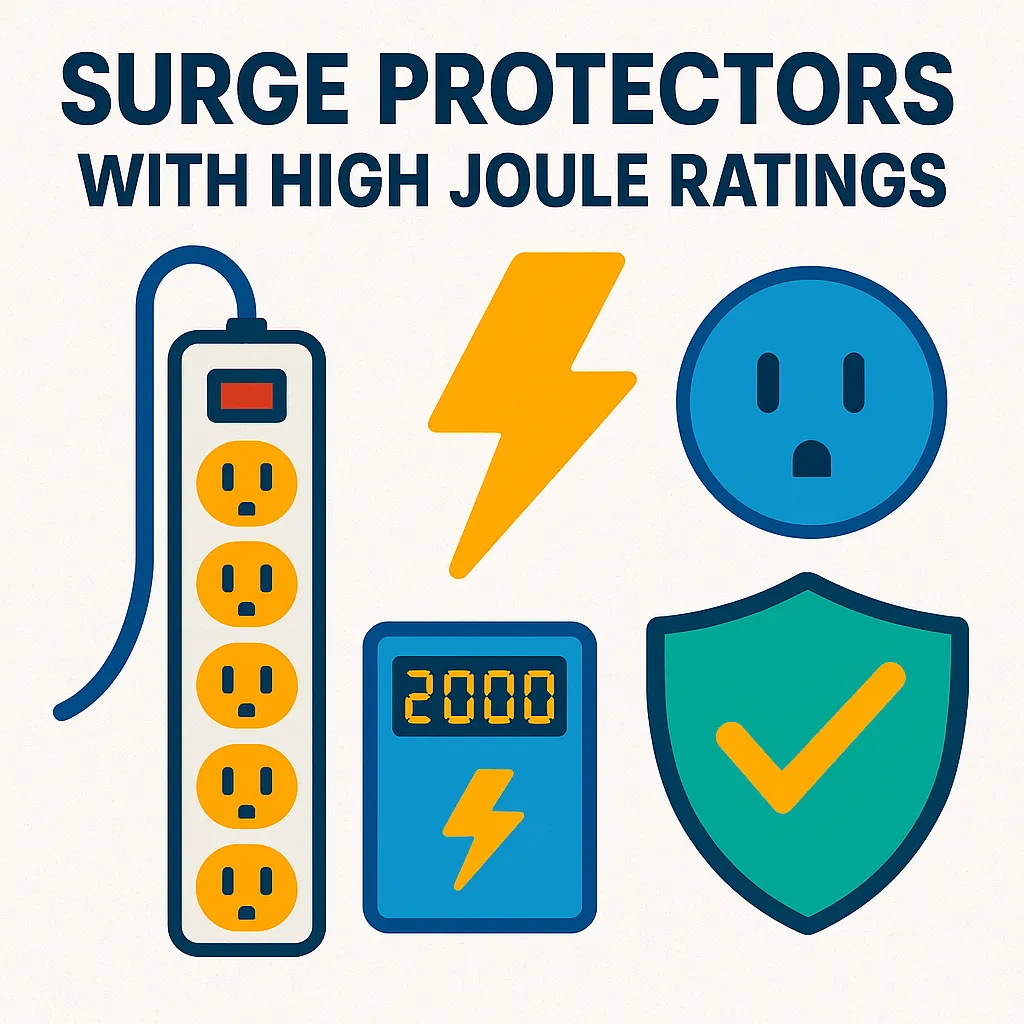
Manufacturers recommend plugging toaster ovens and air fryers directly into a wall outlet. You should avoid using a power strip for these appliances. Surge protectors with high joule ratings may offer some protection, but they still cannot safely support the continuous high current these devices demand. You protect your home by following these guidelines and ensuring that each appliance has a dedicated outlet.
Tip: Always check the wattage rating of your toaster oven or air fryer before plugging it in. If the rating exceeds the safe limit of your surge protector, use a wall outlet instead.
Preventing Electrical Fires
You can take several steps to reduce the risk of electrical fires when using toaster ovens and air fryers. Safety starts with awareness and good habits. Never leave heat-generating appliances unattended while in use. Keep flammable materials, such as dish towels and paper towels, away from these devices. Avoid using multiple high-wattage appliances on the same circuit at the same time. This practice prevents overheating and tripping breakers.
Regular cleaning is essential. Remove lint and grease from your appliances to minimize fire hazards. If you notice sparking, smoking, or frequent breaker trips, replace the appliance immediately. These signs indicate a potential electrical problem that could lead to fire.
Here is a quick safety checklist:
-
Do not leave toaster ovens or air fryers unattended.
-
Keep flammable items away from appliances.
-
Avoid simultaneous use of high-wattage devices on one circuit.
-
Clean appliances regularly.
-
Replace faulty appliances right away.
You create a safer kitchen environment by following these steps. Electrical fires are preventable when you use appliances responsibly and maintain them properly.
Air Conditioners
What Should Never Be Plugged Into A Surge Protector
You rely on air conditioners to keep your home comfortable during hot weather. These appliances demand a significant amount of electricity, especially when the compressor starts. Plugging an air conditioner into a surge protector creates a dangerous situation. The high current draw can overwhelm the surge protector, causing it to overheat. Overheating increases the risk of electrical fires and can damage both the appliance and your home’s wiring.
Air conditioners often require a dedicated circuit because of their high wattage. Using a power strip for these appliances is unsafe. Power strips are not designed to handle the continuous load or sudden surges that air conditioners produce. You may notice signs of overload, such as warm outlets or tripped breakers.
These warning signs indicate that the electrical system cannot support the air conditioner’s demands through a surge protector.
Manufacturers and safety experts recommend plugging air conditioners directly into a wall outlet. This practice ensures stable power delivery and reduces the risk of fire. Always check the manufacturer’s instructions for your specific model. Most guidelines advise against using surge protectors or power strips for air conditioners.
Tip: If you experience frequent breaker trips or notice unusual sounds from your air conditioner, unplug it immediately and consult a licensed electrician.
Safer Alternatives
You have several safer alternatives for cooling your home without risking electrical hazards. Consider these options:
-
Electric fans circulate air and create a breeze, offering relief from heat without high power demands.
-
Swamp coolers use water evaporation to cool air and add humidity to your environment.
-
Window air conditioners are designed for single-room cooling and require less power than central units.
-
Whole house attic fans provide cooling for your entire home, functioning similarly to swamp coolers.
-
Geothermal heat pumps utilize the ground’s temperature for efficient heating and cooling.
Each alternative offers unique benefits and reduces the risk of electrical overload. You can choose the best option based on your home’s needs and climate. Always follow safety guidelines and consult professionals when installing new cooling systems. Prioritizing safe practices protects your home and ensures reliable comfort.
Slow Cookers And Blenders
You often rely on slow cookers and blenders to prepare meals efficiently. These appliances make cooking and food preparation easier, but you must understand their electrical demands to avoid hazards. After learning about the risks of plugging high-wattage devices like air conditioners and toaster ovens into surge protectors, you should apply the same caution to slow cookers and blenders. Both appliances contain internal pumps that drive their operation, requiring substantial energy. When you use these devices, you place a heavy load on your home’s electrical system. Recognizing the dangers associated with improper use helps you protect your kitchen and family.
Power Strip Overload Dangers
Slow cookers and blenders draw significant power during operation. The pump inside a blender can reach up to 1500 watts, similar to the energy consumption of space heaters or air conditioners. Slow cookers maintain consistent temperatures for hours, which places continuous demand on the electrical circuit. If you plug either appliance into a power strip, you risk overloading the device. Overloading causes overheating, which increases the chance of fire. You must avoid plugging high-power appliances into surge protectors. The pump in a blender or slow cooker can quickly exceed the safe limits of these devices.
-
Slow cookers require substantial power to keep food warm for extended periods.
-
Blenders, especially high-powered models, use a strong pump that draws high wattage.
-
Overloading a power strip leads to overheating and fire hazards.
-
Plugging high-power devices directly into wall outlets prevents these risks.
Note: Always check the wattage rating of your appliances before plugging them in. If the pump or heating element exceeds the safe limit, use a wall outlet.
Direct Outlet Use
You ensure safety by plugging slow cookers and blenders directly into wall outlets. The pump in each appliance operates best with a stable power supply. Surge protectors and power strips cannot handle the continuous or high-wattage demands of these devices. Manufacturers recommend direct outlet use for all high-power appliances. You reduce the risk of electrical fires and equipment damage by following this guideline. When you use a wall outlet, you provide the pump with reliable energy and protect your home from hazards.
-
Plug slow cookers and blenders into wall outlets only.
-
Avoid using surge protectors or power strips for high-wattage appliances.
-
Inspect cords and outlets regularly for signs of wear or overheating.
-
Follow manufacturer instructions for safe operation.
You maintain a safe kitchen environment by making smart choices about where you plug in your appliances. Protect your home and family by respecting the power requirements of slow cookers and blenders.
Daisy-Chaining And Overloading
You may think plugging multiple power strips together is a convenient way to expand your outlets, but this practice creates serious risks in your home. When you connect one surge protector to another, you increase the chance of electrical malfunctions and fire hazards. Many people overlook the dangers of power surges and circuit overloads, but fire safety authorities warn that daisy-chaining surge protectors can lead to devastating consequences. Electrical malfunctions from improper use cause nearly 51,000 home fires each year, resulting in hundreds of deaths and thousands of injuries. Safety codes from OSHA, NFPA, and UL strictly prohibit daisy-chaining because it violates electrical standards and increases the risk of fire due to overloading.
Fire Risks Of Daisy-Chaining Surge Protectors
You expose your home to multiple hazards when you daisy-chain surge protectors. Here are the main risks:
-
Daisy-chaining can overload circuits, leading to electrical fires.
-
This practice violates safety codes and regulations.
-
Power strips are rated for a limited number of devices; exceeding this limit increases fire risk.
-
Electrical malfunctions from daisy-chaining surge protectors contribute to thousands of injuries each year.
You must understand that plugging multiple power strips together does not increase safety. Instead, it creates a hazard that can damage your electronics and threaten your home. Power surges become more likely when circuits are overloaded, and the risk of fire rises sharply.
Power Strip Safety Best Practices
You can prevent electrical hazards by following power strip safety best practices. Here are some guidelines to keep your home safe:
-
Use power strips only for low-voltage electronics.
-
Never plug one power strip into another or use multiple strips in the same outlet.
-
Keep cords away from water and moisture.
-
Ensure power strips are not covered to allow air circulation.
-
Regularly check power strips for damage and unplug them if they feel hot.
-
Use extension cords only temporarily, not as permanent wiring.
-
Always pull on the plug when unplugging to prevent cord damage.
-
Use GFCI-protected outlets in areas prone to moisture.
Most household power strips are rated for 15 amps at 120 volts, which equals a maximum of 1800 watts. To avoid overloading, do not exceed 960 watts on any single power strip. If you want to know how to tell if a power strip is overloaded, check for signs like warm outlets, frequent breaker trips, or devices shutting off unexpectedly. You should also learn how to tell if a power strip is overloaded by inspecting for melted plastic, scorch marks, or a burning smell. Power surges can damage your electronics and create a hazard, so always follow surge protection guidelines.
Tip: Never ignore warning signs of overload. If you notice unusual heat or smell, unplug the power strip immediately and consult a licensed electrician.
What Should Never Be Plugged Into A Surge Protector: Summary
You have learned about the dangers of plugging high-power appliances into surge protectors. Now, you need a clear summary of what should never be plugged into a surge protector and why these choices matter for your safety. Many household fires start because people use power strips incorrectly or overload them with the wrong devices. You can prevent these risks by understanding the things you should never plug into a power strip and following simple safety rules. This section gives you a quick reference and practical reminders to help you make safer decisions at home.
Quick Reference List
Here is a list of what should never be plugged into a surge protector. These devices draw high current, generate heat, or require stable power. Plugging them into a power strip or daisy-chaining them can cause overheating, fire, or equipment failure.
-
Refrigerators and freezers: High current draw can overload a power strip.
-
Microwaves: Pull between 1000 and 1500 watts, which exceeds safe limits.
-
Coffee makers and toasters: Need high wattage bursts that damage wiring.
-
Toaster ovens, air fryers, and slow cookers: Generate heat and require dedicated outlets.
-
Hair dryers and curling irons: High heat and wattage can overload strips.
-
Space heaters: Known fire hazards, drawing around 1500 watts.
-
Air conditioners: Need stable current and dedicated outlets.
-
Extension cords: Daisy-chaining is a major fire hazard.
-
Power tools: Generate surges and need stable currents.
-
Washer and dryer: Require 240-volt lines and high current loads.
You should only use surge protectors for low-wattage items like computers, lamps, or chargers.
Home Safety Reminders
You can keep your home safe by following these power strip safety tips:
-
Use only surge protectors or power strips with internal overload protection.
-
Avoid overloading outlets with too many devices.
-
Regularly check the condition of electrical appliances and cords.
-
Replace old or malfunctioning appliances right away.
-
Choose power strips with built-in circuit breakers.
-
Never use adapters that bypass the ground plug.
You protect your home and family when you remember what should never be plugged into a surge protector. Make smart choices and use power strips only for low-wattage items. Your attention to these details helps prevent electrical fires and keeps your home safe.
You face serious risks when you plug high-power devices into a surge protector. Overheating, fire hazards, and equipment damage often result from ignoring power strip safety. Electrical safety experts warn that appliances like refrigerators, microwaves, and air conditioners can overload a power strip and create dangerous conditions. To protect your home, check your electrical setup, distribute appliances across outlets, and use only certified devices. Remember, preventing electrical fires starts with smart habits and regular safety checks.
FAQ
What happens if you plug a refrigerator into a surge protector?
You risk overheating the surge protector. Refrigerators draw high current when the compressor starts. This can cause the device to fail or even start a fire. Always use a dedicated wall outlet for large appliances.
Can you plug a power strip into another power strip?
You should never plug one power strip into another. This practice, called daisy-chaining, overloads circuits and increases fire risk. Use only one power strip per outlet and avoid connecting multiple strips together.
Is it safe to use a surge protector for computers?
You can use a surge protector for computers and other sensitive electronics. It helps protect your devices from voltage spikes. Always check the wattage rating and avoid overloading the surge protector.
Why do some appliances need a dedicated outlet?
Some appliances, like microwaves and air conditioners, draw high wattage. A dedicated outlet ensures they receive enough power without overloading the circuit. This reduces the risk of electrical fires and equipment damage.
How can you tell if a power strip is overloaded?
You may notice warm outlets, tripped breakers, or devices shutting off. These signs indicate overload. Unplug some devices immediately and check the strip for damage. Replace any power strip that shows signs of overheating.