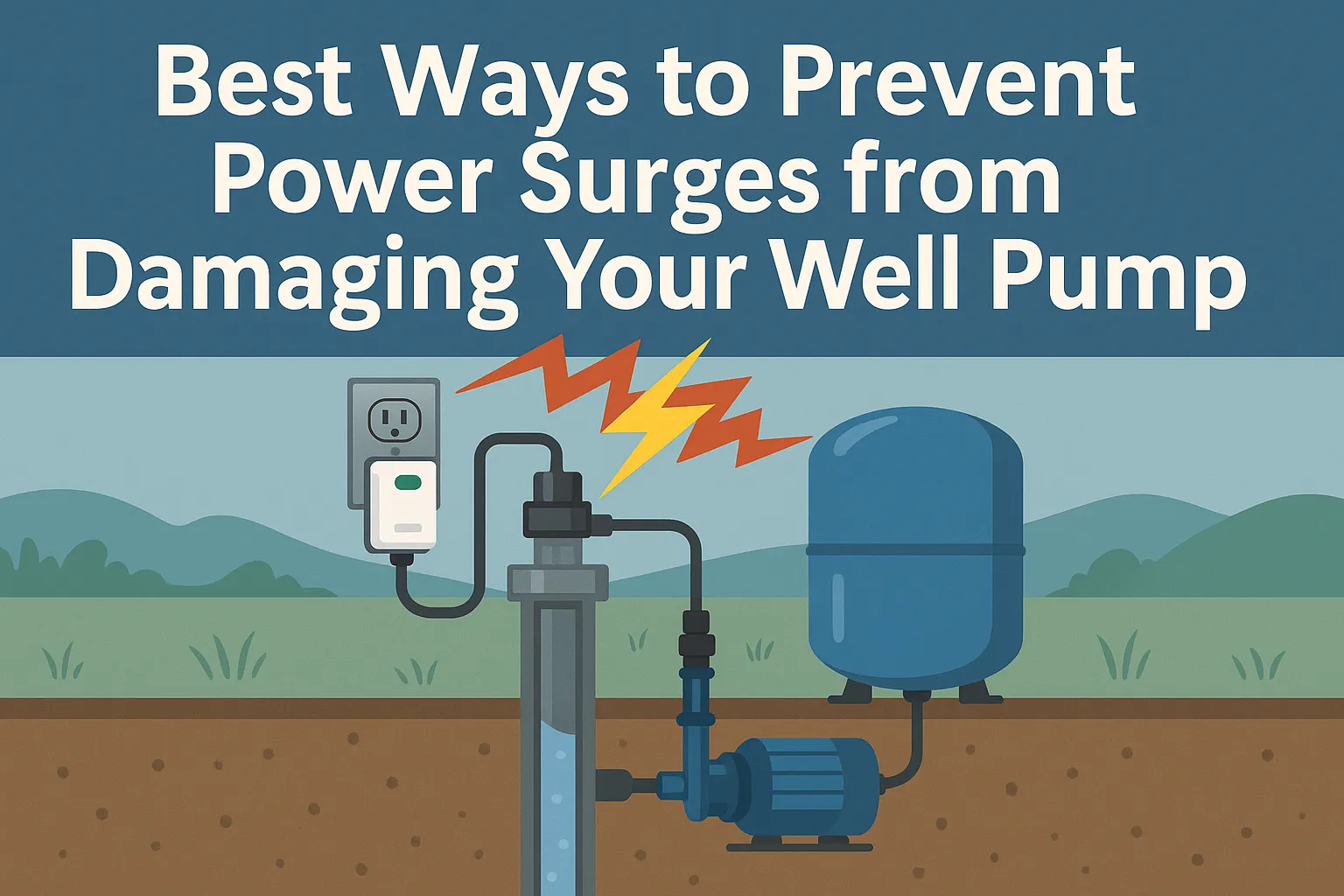
Protect your well pump from expensive damage by taking action now. Install a surge protector for well pump systems for solid lightning protection. Make sure your system has proper grounding and always plan for emergency water access. These simple steps help you avoid costly repairs and understand the risks your pump faces.
Power Surges and Well Pump Risks
You need to understand why power surges pose a serious threat to your well pump. Knowing the risks helps you take the right steps to protect your investment.
Causes of Power Surges
Power surges can strike your home in several ways. The most common causes include:
-
Lightning strikes that send a sudden surge of electricity through your electrical system.
-
Electrical malfunctions, such as faulty wiring or problems with circuit breakers, that create unexpected surges.
-
Utility company issues, like grid switching or power outages, that can result in a surge when power returns.
Your well pump sits at the end of your electrical line, making it especially vulnerable to these surges.
Each surge can send a jolt through the system, damaging sensitive parts.
Well Pump Components at Risk
Not all parts of your well pump handle a surge the same way. Some components face a higher risk of damage:
|
Component |
Susceptibility to Damage |
|---|---|
|
Motor |
High |
|
Control Box |
High |
The motor and control box often fail first when a surge hits. You may also see problems with switches and capacitors. If a surge damages these parts, you could face expensive repairs. On average, fixing a failed well pump costs about $973. Minor parts might cost $10, but major components can reach $500.
You also need to pay for professional service, which usually adds $50 per hour and a diagnostic fee of $100 to $150.
A single power surge can lead to repeated failures if you do not address the root cause. Taking action now protects your well pump and your wallet.
Surge Protector for Well Pump: Best Solutions
You have learned about the risks that power surges pose to your well pump. Now, you need to know the best ways to protect your system. The right surge protection device and proper installation can make a big difference in keeping your water supply safe.
Whole-House Surge Protector
A whole-house surge protector acts as your first line of defense. It blocks large surges from entering your home’s electrical system. This type of surge protection device can handle much higher voltages than a dedicated surge protector for well pump systems. Whole-house units can stop surges up to 20,000 volts, which protects all appliances, including your well pump.
Here are some of the top-rated whole-house surge protectors based on consumer reviews:
|
Product Name |
Maximum Surge Current Capacity |
Voltage Protective Rating |
Modes of Protection |
|---|---|---|---|
|
80kA |
L-N: 600V / L-G: 700V / L-L: 1000V / N-G: 1000V |
L-N, L-G, L-L, N-G |
|
|
108kA |
L-N: 600V / L-G: 600V / L-L: 1000V / N-G: 800V |
L-N, L-G, L-L, N-G |
|
|
Sycom SYC-120/240-T2 |
100kA |
L-L: 1200V / L-G: 600V |
L-L, L-G |
|
50kA |
L-N: 600V / L-L: 1000V |
L-N, L-L |
When you install a whole-house surge protection device at your main panel, you give your well pump and other appliances the best chance to survive a major surge. This is especially important if you live in an area with frequent lightning or unstable power lines.
Dedicated Surge Protector for Well Pump
A dedicated surge protector for well pump systems adds another layer of safety. This device connects directly to the well pump circuit. It works as a transient voltage surge suppressor, catching smaller surges that might get past your main panel protection.
Follow these steps to install a dedicated surge protection device for your well pump:
-
Turn off the main power to your house at the electrical panel.
-
Remove the panel cover to access the circuit breakers.
-
Find a spot near the main power lines for the surge protector.
-
Install the surge protection device according to the manufacturer’s instructions.
-
Connect the device to a dedicated circuit breaker.
-
Make sure you ground the surge protector properly.
-
Replace the panel cover and restore power.
A dedicated transient voltage surge suppressor helps protect your well pump from everyday electrical spikes. When you combine it with a whole-house surge protection device, you create a strong defense against both large and small surges.
Proper Grounding and Bonding
Grounding and bonding are critical for surge protection. The National Electrical Code requires that you use a proper ground source for every surge protection device. Deep well steel casings work well because they reach deep into the earth and provide a low-resistance path for electricity.
If your well uses a copper water line, you should bond it to both the well casing and your house’s electrical ground.
For plastic water lines, bury a #6 bare copper bonding jumper to connect the well casing to the house ground. This ensures that all parts of your system share the same electrical potential, which helps your surge protector for well pump work correctly. Proper grounding allows a surge protection device to send excess energy safely into the ground. This step is essential for protecting your well pump from lightning and other surges.
Without good grounding, even the best transient voltage surge suppressor cannot do its job.
Backup Options for Well Pump Protection
Backup devices keep your well pump running during power outages and protect it from surges when the power returns. Most well pumps need a generator that can handle three to five times the pump’s running wattage. For example, a 1 HP pump (about 2,000 running watts) needs a generator with 6,000 to 10,000 starting watts.
-
A generator rated between 5,000 and 7,500 watts works for most homes.
-
Larger generators (over 10,000 watts) can power your pump and other appliances.
-
Inverter generators provide clean power for sensitive electronics and well pumps. Make sure the inverter can handle the pump’s starting surge.
-
Some inverter models are rated for motor loads, or you can use a soft-start device to reduce the surge.
Battery backup systems are less effective for well pumps. They often cannot handle the large surge needed to start the pump. You may need several battery units for long outages, while a generator can run for days if you have fuel.
FAQ
You want to keep your well pump safe and ready for any emergency. Here are answers to common questions about surge protection, backup, and emergency water access.
How do I keep my well pump working during power outages?
You need backup power. Use a generator or battery system. This backup keeps your well pump running and ensures water during an emergency.
What is the best way to protect my well pump from a surge?
Install a surge protector for your well pump. Combine this with proper grounding and backup power. You prevent damage and keep your system ready for any emergency.
How can I prepare for an emergency if my well pump fails?
Store emergency water. Set up backup power for your well pump. Keep a backup pump or repair kit. You stay ready for any emergency and avoid long water outages.