- Summary
- When Lightning Strikes (or Your Fridge Betrays You)
- The Code Unplugged: What the CEC Actually Says
- Why Bother? The Shocking Truth About Surges
- The SPD Family: Type 1, Type 2, and the Misunderstood Type 3
- Myths, Missteps, and ‘My Uncle Said’ Advice
- Choosing and Installing: Don’t Let the Smoke Out
- Final Thoughts
- FAQ: You Asked, We Clarified
Summary
-
The 2021 Canadian Electrical Code (CEC) mandates surge protection devices (SPDs) at the service entrance for new dwelling units and many commercial buildings.
-
Type 1 or Type 2 SPDs are required; plug-in power bars (Type 3) are not enough to satisfy the code.
-
Surges come from lightning, utility switching, and appliances inside your own home, and they can destroy electronics over time.
-
Common myths — like “surge protectors last forever” or “my old house is exempt” — lead to expensive mistakes.
-
Proper selection, placement, and professional installation are essential for both safety and passing inspection.
When Lightning Strikes (or Your Fridge Betrays You)
One minute you are binge-watching a cooking show, the next your TV emits a sad fizzle and the room smells like burnt ambition. The culprit might not be a dramatic lightning bolt. It could be the compressor in your 1992 garage fridge kicking back a surge that travels through your wiring and claims your gaming rig as collateral damage. Surge protection could have prevented the carnage, but until recently, the rules around it in Canada were about as clear as a muddy puddle. The Canadian Electrical Code has now stepped in, turning surge protection from a nice-to-have into a must-install. The jargon can still feel like a foreign language, so this guide translates the code into plain English, with only a few eye rolls.
The Code Unplugged: What the CEC Actually Says
The 2021 CEC, specifically Rule 4-006, requires that every dwelling unit be provided with surge protection. That means new homes, major renovations, and panel upgrades now need a Type 1 or Type 2 SPD at the service entrance or distribution panel. Rule 4-008 extends similar requirements to other buildings, including commercial and industrial spaces, with some variations based on the electrical system configuration. The intent is straightforward: stop surges before they spread through your wiring like gossip at a family reunion.
|
Code Rule |
Application |
Required Device Type |
Notes |
|---|---|---|---|
|
4-006 |
Dwelling units (houses, apartments) |
Type 1 or Type 2 SPD |
Must be installed at the service entrance or main distribution panel. |
|
4-008 |
Non-dwelling units (commercial, etc.) |
Type 1 or Type 2 SPD |
Requirements can vary based on risk assessment and system voltage. |
|
4-004 |
General installation standards |
All SPDs |
Requires devices to be certified to applicable standards (e.g., UL 1449). |
Fact-checked citation: Canadian Electrical Code, Part I, 25th Edition, 2021, Rules 4-004, 4-006, and 4-008.
These rules are not suggestions. Electrical inspectors now check for SPDs, and missing one can mean a failed inspection and a costly delay. For a deeper dive into the code changes, see Understanding the New Surge Protector Code Rules.
Why Bother? The Shocking Truth About Surges
Lightning gets all the headlines, but 60 to 80 percent of damaging surges originate inside your own home. Every time a motor-driven appliance cycles on or off — your air conditioner, washing machine, or that ancient hair dryer — it can generate a voltage spike. These spikes gradually degrade sensitive electronics like computers, smart appliances, and LED lighting. One day they just die, and you are left wondering if you offended the tech gods. Whole-home surge protection is a seatbelt for your electrical system: mildly annoying to think about until the moment it saves you from a wreck. The CEC’s mandate reflects our growing dependence on microprocessor-controlled everything and the rising cost of replacement. The ROI of installing an SPD is often measured in one avoided service call. More on that at What to Expect from Surge Protection ROI for Modern Homes.
The SPD Family: Type 1, Type 2, and the Misunderstood Type 3
Not all surge protectors are created equal. The code recognizes three types, and confusing them is like mistaking a tricycle for a transport truck.
-
Type 1: The heavy-duty bouncer. Installed on the line side of the main service breaker, it handles direct lightning hits and massive external surges. It is hardwired permanently and often found in commercial or industrial settings, though it is also permitted for homes.
-
Type 2: The reliable backup. Installed on the load side of the main breaker, at the distribution panel. This is the most common whole-home device required by Rule 4-006. It protects branch circuits from both external and internally generated surges.
-
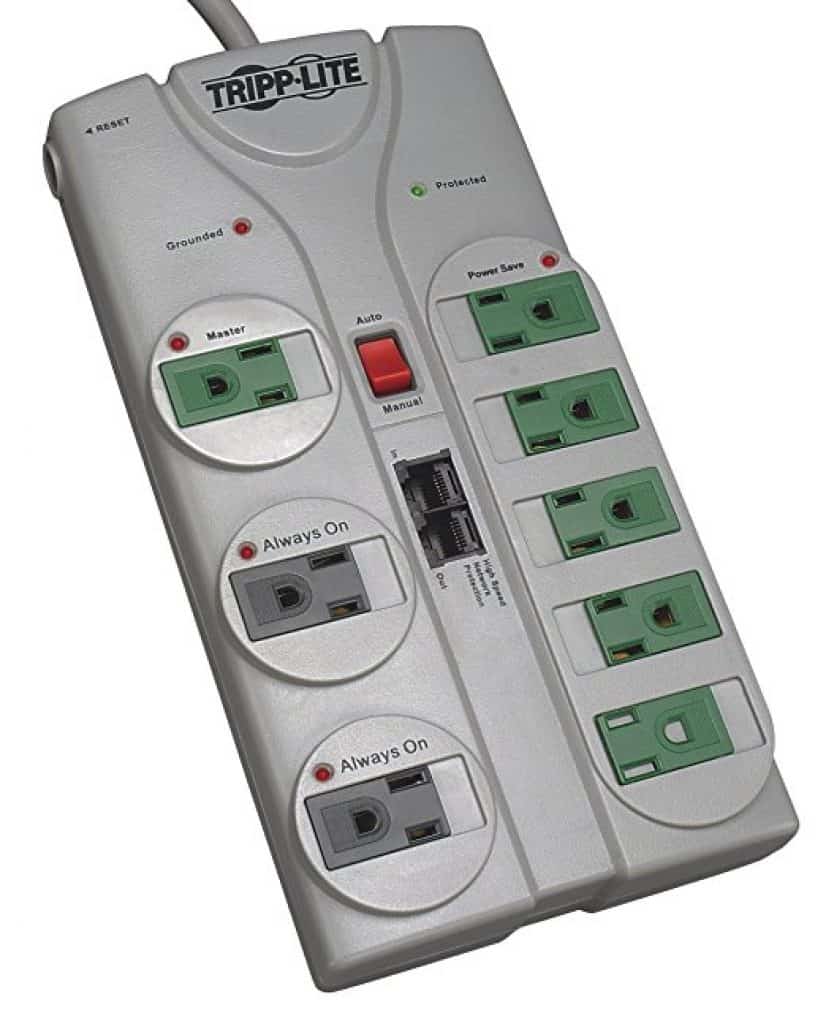
Type 3: The point-of-use protector — your beloved power bar with the little red light. It is a supplement, not a substitute. The code does not consider it primary protection, no matter how many joules the packaging brags about.
|
SPD Type |
Typical Location |
Protects Against |
Code-Compliant Primary Protection? |
|---|---|---|---|
|
Type 1 |
Service entrance, before main breaker |
External surges (lightning, utility) |
Yes |
|
Type 2 |
Main panel, after main breaker |
External and internal surges |
Yes |
|
Type 3 |
Receptacle outlet |
Internal surges at the point of use |
No |
For help sizing a device correctly, visit How to Choose and Size the Right Surge Protection Device.
Myths, Missteps, and ‘My Uncle Said’ Advice
Myth 1: “A power bar with a little red light is all I need.”
That is a Type 3 device. The code demands a Type 1 or 2 at the panel. Your power bar is a sidekick; it cannot guard the whole house any more than a single umbrella can keep a football stadium dry.
Myth 2: “Surge protectors last forever.”
They do not. Metal oxide varistors inside SPDs sacrifice themselves each time they clamp a surge. Many units have indicator lights that lie, failing silently. After a major surge or every 3 to 5 years, replace them. Manufacturer guidelines and Electro-Federation Canada both advise regular inspection.
Myth 3: “My house is old, so I am exempt.”
Not necessarily. Major renovations, service upgrades, or panel replacements that trigger a permit will likely require you to add an SPD to meet the current code. Local authorities having jurisdiction (AHJs) can enforce this. Check with your local electrical safety authority, such as the Electrical Safety Authority (ESA) in Ontario or Technical Safety BC.
Choosing and Installing: Don’t Let the Smoke Out
Select an SPD with UL 1449 certification and a surge current rating (kA) appropriate for your region. Areas with frequent lightning storms need higher ratings. Installation is not a DIY job. A licensed electrician must install Type 1 and Type 2 devices because the work involves live bus bars and code-specific wiring methods. The leads must be kept as short and straight as possible; excessive length adds impedance and renders the SPD less effective. The code is picky about this for a reason. For a practical look at combining panel-level and point-of-use protection, see Dual Location Surge Protection for a Home: A Practical Safety Guide. If you are managing a commercial property, the rules and strategies differ: Smart Surge Protection Strategies for Commercial Buildings covers those nuances. And for a broader set of common questions, the Surge Protection Tips Information and Frequently Asked Questions page is a handy resource.
Final Thoughts
The CEC’s surge protection rules are not bureaucratic busywork. They are a direct response to our increasingly electrified lives, where a single voltage spike can turn a smart home into a dumb pile of scrap. Code compliance keeps your inspection on track and your electronics breathing. Do not wait for a surge to prove the point — a quick panel check by an electrician costs far less than a new appliance suite. And remember: the best surge protection is the one that lets you finish your show without the screen going dark.
FAQ: You Asked, We Clarified
Q: Does the Canadian Electrical Code require surge protection for existing homes?
A: Not automatically. However, if you undertake a major renovation, panel upgrade, or service change that requires a permit, you will likely need to add an SPD to meet the 2021 CEC. Local amendments may also apply.
Q: Can I install a surge protector myself?
A: Legally, no. Installing a Type 1 or Type 2 SPD inside a panel involves working with exposed live parts and must be done by a licensed electrician. DIY is for painting, not for probing bus bars.
Q: What is the difference between a surge protector and a whole-home surge protector?
A: “Whole-home” typically refers to a Type 1 or Type 2 device installed at the main panel, which protects all circuits. A plug-in “surge protector” is a Type 3 device that only protects the gear plugged into it. The code requires the panel-level device.
Q: How do I know if my surge protector is still working?
A: Check the indicator light, but do not trust it blindly. Some SPDs fail without any visible sign. If the unit is over 3 to 5 years old or you have experienced a major surge event, replace it. For more on this, see Understanding UPS and Surge Protection Features.
Q: Are surge protectors required in condos or apartments?
A: Yes, the CEC applies to dwelling units in multi-family buildings. While the building’s main service may have an SPD, individual units often still need one at their own distribution panel to satisfy Rule 4-006. Consult the building’s electrical drawings or an electrician.
Q: Does a surge protection device need its own circuit breaker?
A: Many Type 2 SPDs are connected via a dedicated breaker, which also provides overcurrent protection and a means of disconnect. The installation instructions and code must be followed. Details at Does Surge Protection Need an MCB for Safe Operation?.
Q: Where can I find a reliable whole-house SPD?
A: Look for products certified to UL 1449 and CSA standards. Reviews and comparisons can help narrow the field: 5 Best Whole House Surge Protection Devices Reviewed. Always have a licensed electrician perform the installation.