Summary
Texas does not write its own surge rule. It relies on the National Electrical Code (NEC), which cities adopt and sometimes amend. Under NEC 230.67, which first appeared in the 2020 edition, new dwelling unit services need a Type 1 or Type 2 surge protective device (SPD). The 2020 text also applies the requirement when service equipment is replaced. Which edition applies to your house depends on your local building department.
-
Required: an SPD at or next to the service equipment for new dwelling services and service equipment replacements, where the adopted NEC edition includes the rule.
-
Only recommended: whole-home protection for existing homes where nothing is being replaced, plus plug-in protectors for sensitive electronics.
-
Who enforces it: your city or county inspector, not the state. TDLR handles electrician licensing.
Introduction: Your Home Has Zapped Feelings Too
Texas offers lightning, grid strain, and a toaster that will absolutely sacrifice itself for your television. Surges come from lightning, from utility switching, and from big appliances inside your own house cycling on and off. The Electrical Safety Foundation International publishes consumer guidance on all three. This article covers what the code requires, why your address changes the answer, and what to do about it.
Who Actually Makes the Rules in Texas?
The NEC is published by NFPA and revised every three years. Texas electrician licensing and the state’s NEC adoption run through the Texas Department of Licensing and Regulation (TDLR) and the state electrical board, under Texas Occupations Code Chapter 1305.
Inspections of home wiring are mostly a local matter. Cities adopt an NEC edition and may amend it, so Houston, Dallas, Austin, and San Antonio can each be on a different edition. Check the permitting office for your city, such as the Houston Permitting Center, before assuming anything. Some unincorporated areas have little or no residential electrical inspection, which does not make the risk smaller. Confirm the currently adopted edition and its effective date with TDLR and your jurisdiction, because those dates change.
What the NEC Says About Surge Protection for Homes
NEC 230.67 requires services supplying dwelling units to have a Type 1 or Type 2 SPD. It must be part of the service equipment or installed immediately adjacent to it. The 2020 edition applies the requirement when service equipment is replaced. The 2023 edition revised the surge provisions, including language that reaches feeders, so read the exact text for the edition your city enforces.
The trigger is work on the service, not a retrofit order for every existing house. The code also protects at the panel, not at every outlet. That is a minimum, and it is why panel protection and plug-in protection are complementary.
Texas surge protection at a glance
|
Situation |
SPD typically required? |
Source |
Notes |
|---|---|---|---|
|
New home build |
Yes, if the adopted NEC is 2020 or later |
NEC 230.67 |
Depends on the local edition |
|
Service equipment replacement |
Yes, under the 2020 replacement language |
NEC 230.67 |
Confirm with your inspector |
|
Remodel or added circuits, service untouched |
Generally no |
NEC 230.67 |
2023 feeder provisions may matter; ask locally |
|
Existing home, no changes |
No blanket retrofit mandate |
NEC Article 90 (scope) |
Optional upgrade |
|
Rental property |
Same triggers as any home |
NEC 230.67 |
The work triggers the rule, not tenancy |
|
Local amendment |
Varies |
City or county ordinance |
Call the building department |
SPD types
|
Type |
Installed |
Typical use |
|---|---|---|
|
Type 1 |
Line side of the service disconnect |
Whole-home, at the meter or service |
|
Type 2 |
Load side of the service overcurrent device |
Whole-home, at the panel |
|
Type 3 |
Point of use, at least 10 m (30 ft) of conductor from the panel |
Outlet or cord-connected protectors |
The classifications come from UL 1449, the safety standard for SPDs. NEMA also publishes guidance on how they work. Our guide to service entrance surge protection covers the panel-side hardware in more detail.
Whole-Home vs. Plug-In Protectors
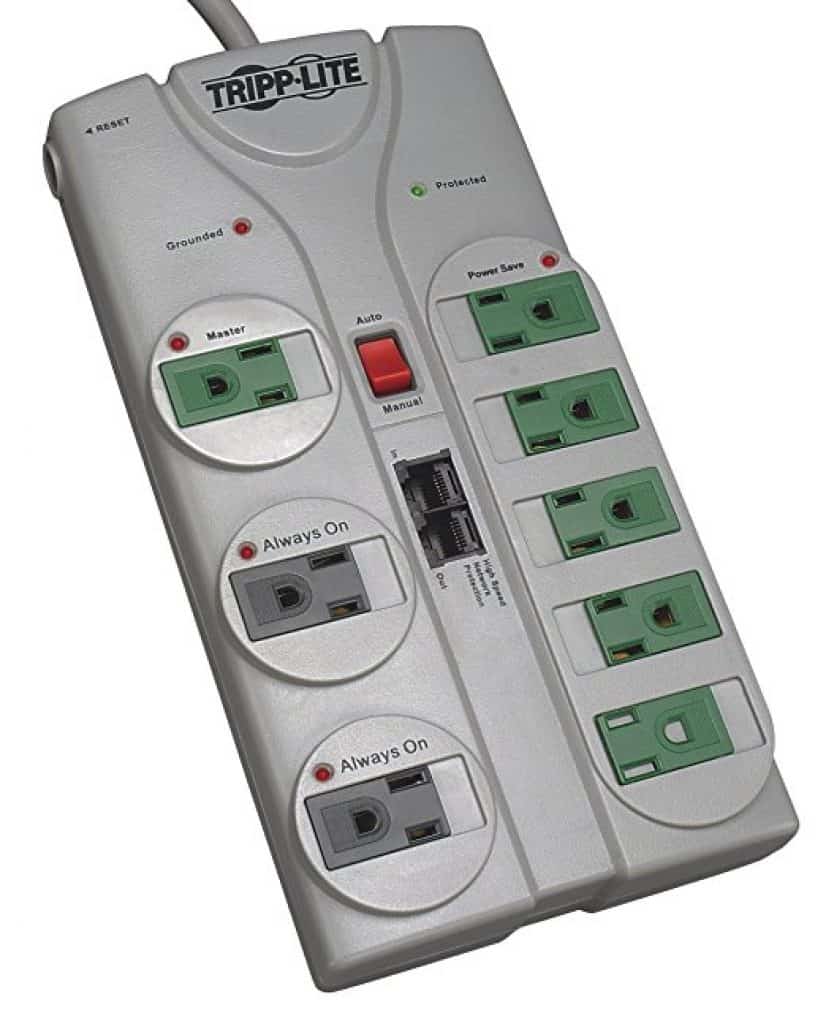
A panel-level SPD takes the big hit coming in from the street. Plug-in protectors catch what gets through and what your own appliances generate. Using both is the layered approach, and it is sensible even where the code asks for only one. If you are comparing models, see how to size a surge protection device and these whole-house options.
On the label, look for:
-
A UL 1449 listing.
-
A voltage protection rating (lower is better).
-
A status indicator light.
A bargain power strip with no listing is an extension cord in a costume. It offers extra outlets and no protection.
SPDs wear out, because they absorb surges until their components degrade. The indicator light is how many units tell you protection is gone, so replace the unit when it says so. Stacking multiple units has its own pitfalls, covered in doubling up surge protectors.
Practical Steps Before You Call an Electrician
-
Look at the panel for an existing SPD mounted on or next to it. Note the home’s age and whether the service was ever replaced.
-
Call your building department to confirm the adopted code edition and whether a permit is needed.
-
Hire an electrician and verify the license through TDLR’s license search.
-
Ask for the installation scope in writing and get more than one quote. Any price you see online is a guess until someone looks at your panel.
-
Ask your insurer whether surge damage is covered and whether a discount applies. The Texas Department of Insurance and the Insurance Information Institute explain homeowners coverage basics.
Final Thoughts
New services under recent NEC editions require an SPD, older homes can benefit from one, and your local rules decide the details. Verify the local code, use a licensed electrician, and pull a permit when the building department asks for one. Better the surge protector takes the hit than the refrigerator.
FAQ
Does Texas require surge protection in every home? No. The requirement attaches to new services and service equipment replacements where the locally adopted NEC edition includes NEC 230.67.
Does my existing home need a whole-home surge protector? Generally there is no blanket retrofit mandate, but confirm with your local building department.
What is the difference between Type 1 and Type 2 SPDs? Type 1 connects on the line side of the service disconnect. Type 2 connects on the load side of the service overcurrent device, which is the usual panel installation.
Do I need a permit to install one? It depends on the jurisdiction. Many cities treat panel work as permitted work, so ask before scheduling.
Can I install one myself? It involves working inside the service equipment, which is dangerous, and local rules and licensing may require a licensed electrician. Ask your building department.
Will it help during an outage or a direct lightning strike? It does nothing for an outage. A direct strike can overwhelm any protector, though a panel SPD and point-of-use devices improve your odds against nearby strikes and grid surges. The dual location approach explains how layers work together.
How long does a whole-home surge protector last? There is no fixed lifespan, because it depends on how many surges it absorbs. Watch the status indicator and follow the manufacturer’s guidance.