What is better than a surge protector? The answer depends on what you want to protect against. If you mean a plug in surge protector, adding a whole home surge protection device gives your home broader coverage. If you also need a computer to stay on during a power outage, a UPS adds battery backup. Neither option makes plug in protection useless. For many homes, the practical answer is to use the right devices together.
There is an important distinction: a whole home surge protection device is still a surge protector. It protects a different part of the electrical system. And a UPS is not automatically better at stopping surges just because it does more during an outage.
- The Short Answer
- Why a Plug In Surge Protector May Not Be Enough
- What Gives You Broader Surge Protection?
- Is a UPS Better Than a Surge Protector?
- How the Options Compare
- Do Grounding and Electrical Maintenance Replace a Surge Protector?
- Which Setup Makes Sense for Your Home?
- Frequently Asked Questions
- Bottom Line
The Short Answer
- For broader surge coverage: Ask an electrician about a whole home surge protection device at the electrical panel.
- For individual electronics: Use a suitable plug in surge protector where the device connects.
- For short power outages: Consider a UPS for equipment that needs time to stay on or shut down safely.
- For any of these to work properly: Have an electrician check the condition of the panel, wiring and grounding when needed.
Why a Plug In Surge Protector May Not Be Enough
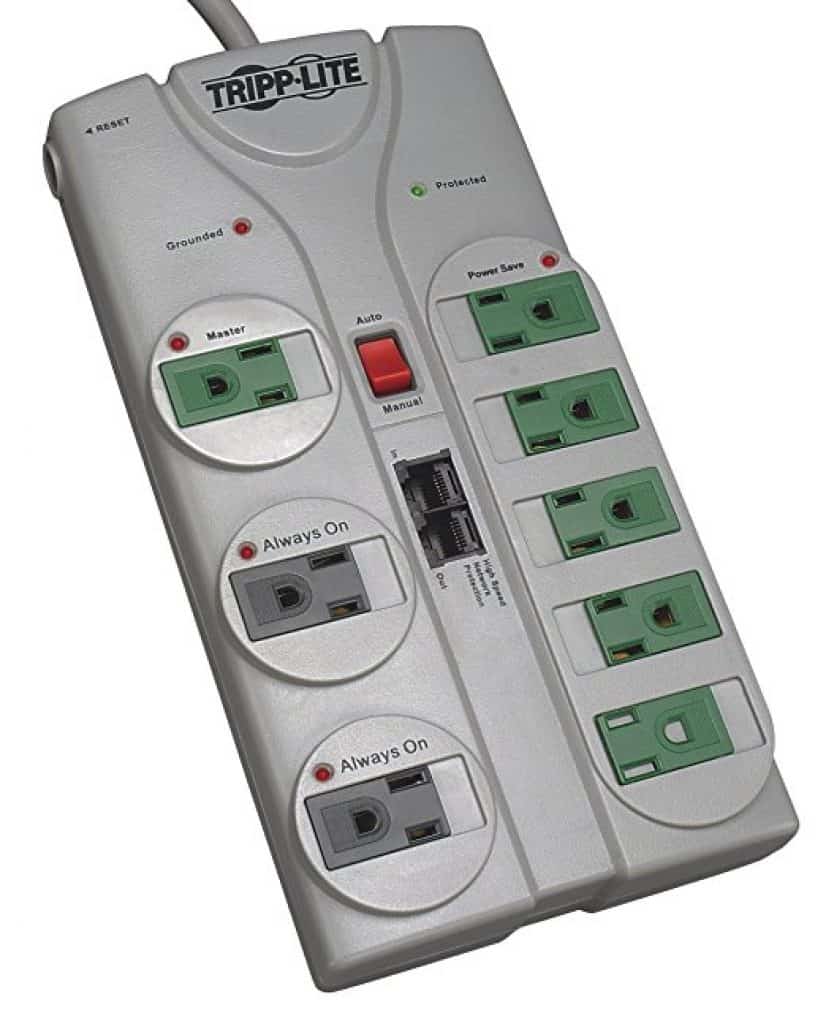
A plug in surge protector helps protect devices connected to it. It does not cover equipment elsewhere in the house. Your air conditioner, hardwired appliances and electronics plugged into other outlets do not gain protection simply because one power strip has surge protection.
Surges can come from outside or inside the home. Events on utility lines and nearby lightning can send surges toward a house. Electrical equipment within a home can also create smaller voltage disturbances. The size and path of a surge affect which devices are exposed.
Many plug in protectors use components called metal oxide varistors, or MOVs. These components help limit excess voltage, but their protective ability can decline after repeated or severe surges. A power strip can still supply electricity even when its surge protection no longer works. Follow the product instructions and check any protection status indicator it provides.
What Gives You Broader Surge Protection?
A Whole Home Surge Protection Device
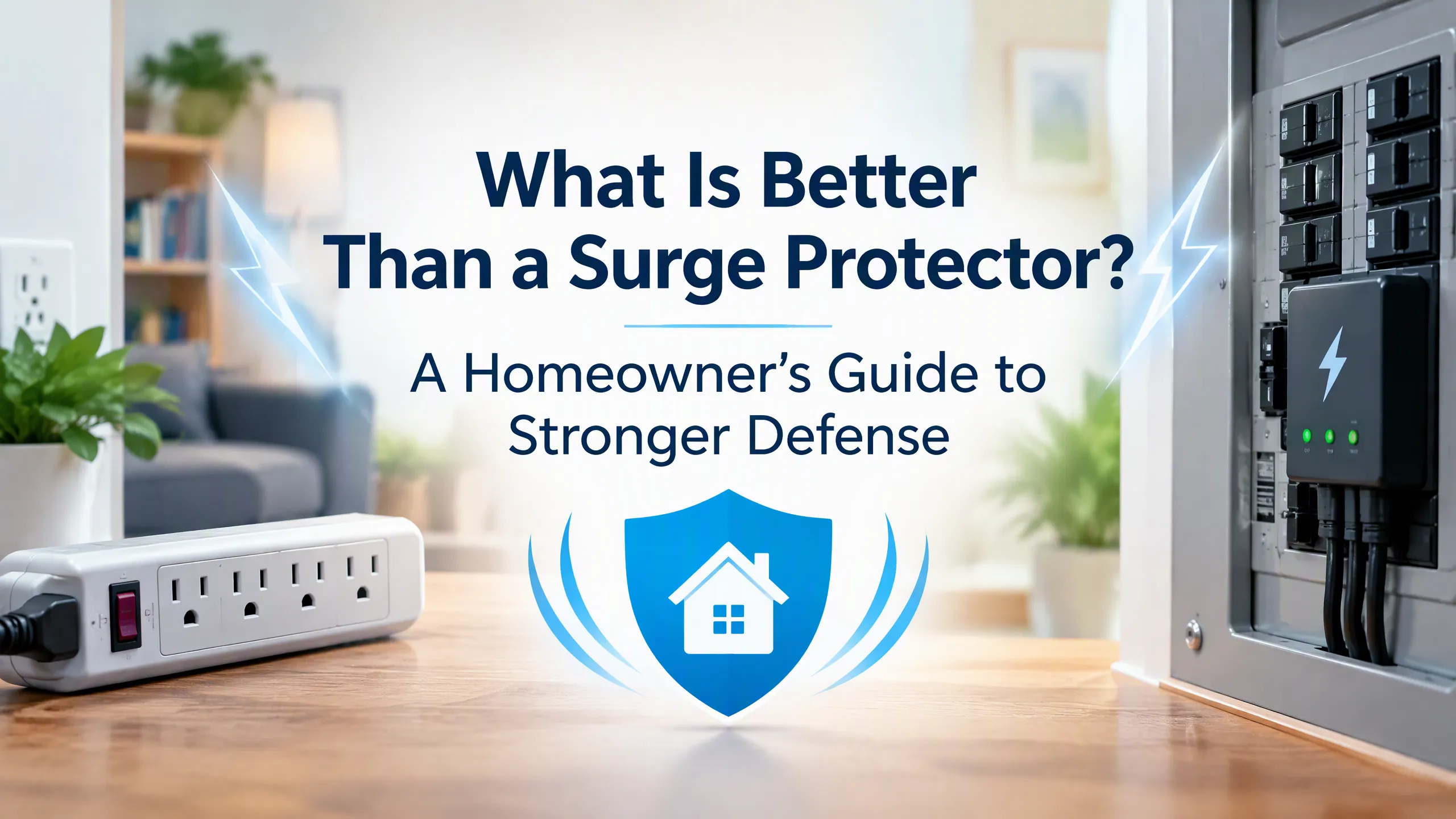
A whole home surge protection device is installed at or near the main electrical panel. Its job is to limit surges that enter through the electrical supply before they reach circuits throughout the house. That gives it a wider role than a plug in protector at a single outlet.
This can matter for appliances and equipment that cannot be plugged into a power strip. But “whole home” does not mean complete protection from every event. A panel device cannot guarantee that electronics will survive a direct lightning strike or every surge created close to a device. Protection also depends on the installation and the condition of the electrical system.
Think of it as broader coverage, not a perfect replacement for the protectors you already use. An electrician can advise whether your panel can accommodate a device and which type is suitable for your home.
Plug In Protection for Sensitive Devices
A plug in protector still has a useful job after a whole home device is installed. It provides protection at the outlet for the electronics connected to it. This extra layer can be useful for computers, televisions and other equipment you want to protect.
Choose a product intended for surge protection rather than assuming every power strip includes it. Check its instructions, protection indicator and replacement guidance. A damaged unit or one that indicates protection has failed should be replaced.
Is a UPS Better Than a Surge Protector?
A UPS is better when losing power is part of the problem. A standard surge protector does not keep a computer running when electricity goes out. A UPS uses a battery to provide limited power, giving you time to save work or shut equipment down safely. Many UPS units also include surge protection for connected devices.
But battery backup and surge protection are different features. A UPS protects only the equipment connected to it and does not replace a whole home surge protection device. Its battery runtime also depends on the unit and the equipment drawing power.
If you rely on powered medical equipment, do not assume a consumer UPS is suitable for it. Follow the equipment maker’s guidance and discuss backup power needs with a qualified professional.
How the Options Compare
| Option | Main benefit | Main limit | Good fit for |
|---|---|---|---|
| Plug in surge protector | Surge protection for connected devices | Does not cover the rest of the home or provide battery power | Electronics at a specific outlet |
| Whole home surge protection device | Broader protection for electrical circuits supplied through the panel | Does not guarantee protection against every surge | Homes with appliances and electronics across multiple circuits |
| UPS | Limited battery backup, often with surge protection | Protects connected equipment only and has limited runtime | Computers, network equipment and other devices needing a safe shutdown |
Do Grounding and Electrical Maintenance Replace a Surge Protector?
No. Proper grounding and sound wiring support an effective electrical system, but they do not do the same job as a surge protection device. Likewise, adding a surge protector will not fix damaged wiring or an unsafe panel.
If your home has an older panel, known wiring problems or concerns about grounding, ask a licensed electrician to inspect it. The electrician can assess the installation before recommending or fitting a whole home device. Do not open or work inside an electrical panel yourself.
Which Setup Makes Sense for Your Home?
- You own a home and want wider surge coverage: Ask an electrician about a whole home device. Keep suitable plug in protectors for valuable electronics.
- You work from a computer and cannot afford an abrupt shutdown: Consider a UPS sized for the equipment you plan to connect.
- You rent and cannot change the electrical panel: Use appropriate plug in protection for your electronics. Ask your landlord about any concerns with the building’s electrical system.
- You are unsure about your wiring or grounding: Start with an electrical inspection rather than buying a device based on a claim of complete protection.
If you are comparing panel devices, see our guide to whole house surge protection devices. Check that any model you consider suits your electrical system and installation requirements.
Frequently Asked Questions
Can a whole home surge protector replace every plug in protector?
Not necessarily. A panel device offers broader coverage, while a plug in device protects equipment at its outlet. Using both can provide protection at two points in the electrical system.
Can a UPS replace a whole home surge protection device?
No. A UPS serves the devices connected to it. Its battery backup helps during an outage, but it does not provide protection throughout the home.
Will any surge protector stop damage from a direct lightning strike?
No device can promise that. A severe lightning event can overwhelm protection or reach equipment by other paths. Avoid products that claim to make a home completely surge proof.
Do I need an electrician for a whole home device?
Yes. Installation at an electrical panel involves safety and system compatibility. Have a licensed electrician assess and install the device.
Bottom Line
If by “surge protector” you mean a basic plug in power strip, a whole home surge protection device plus suitable plug in protection gives broader coverage than the power strip alone. Add a UPS when you also need short term battery power. There is no single device that solves every surge and outage problem, so choose protection based on the equipment and risks that matter in your home.